5 Ways AI Helps Kids Express Their Creativity
Your five-year-old describes her dragon in vivid detail — purple scales, golden wings, fire that sparkles like glitter. Then she picks up a crayon, draws it, and frowns. “That’s not what it looks like in my head.” Every parent knows this moment. The gap between what children imagine and what their developing hands can put on paper is real, and it can quietly chip away at creative confidence.
That’s where AI art for children’s drawings is changing the game. A new generation of kids creativity apps takes a child’s own drawing — wobbly lines and all — and transforms it into polished artwork that matches their vision. The result? Children who draw more, experiment freely, and develop a stronger creative identity.
Here are five ways AI-powered tools amplify (not replace) your child’s creativity.
1. Bridging the Gap Between Imagination and Ability
Developmental psychologists have long documented what they call the “imagination-execution gap.” Between ages 3 and 8, children’s cognitive and creative abilities far outpace their fine motor skills. They can envision elaborate scenes but lack the hand control to render them on paper. Research shows that this mismatch peaks around ages 5-6, when creative ambition surges but motor skill maturation still has years to go.
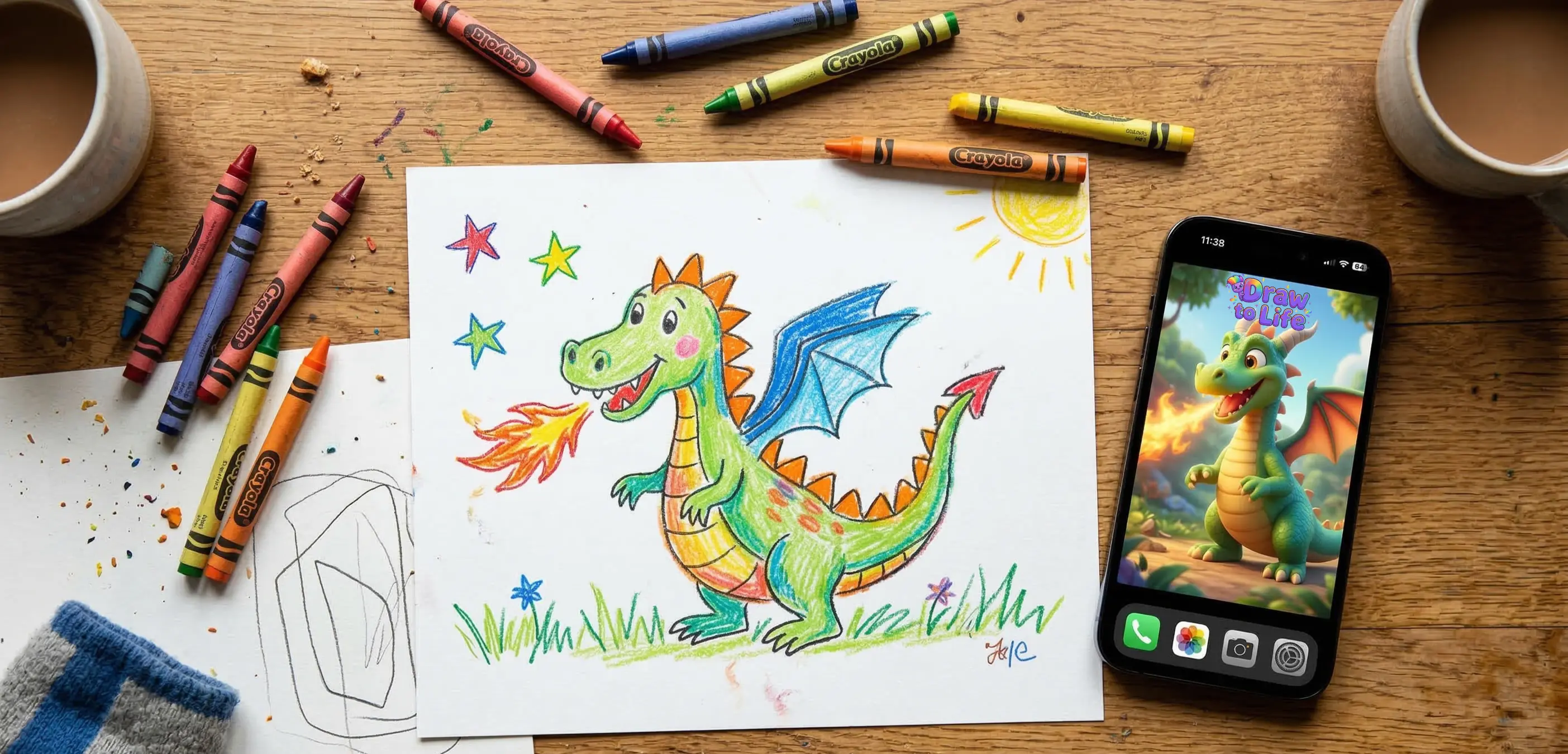
AI art for children’s drawings bridges this gap in a powerful way. A child draws their purple dragon — lumpy body, uneven wings, a squiggle of fire. The AI transforms it into a detailed illustration that preserves every creative choice the child made: the purple scales, the golden wings, the sparkling fire. The child’s idea stays at the centre; the technology simply helps it shine.
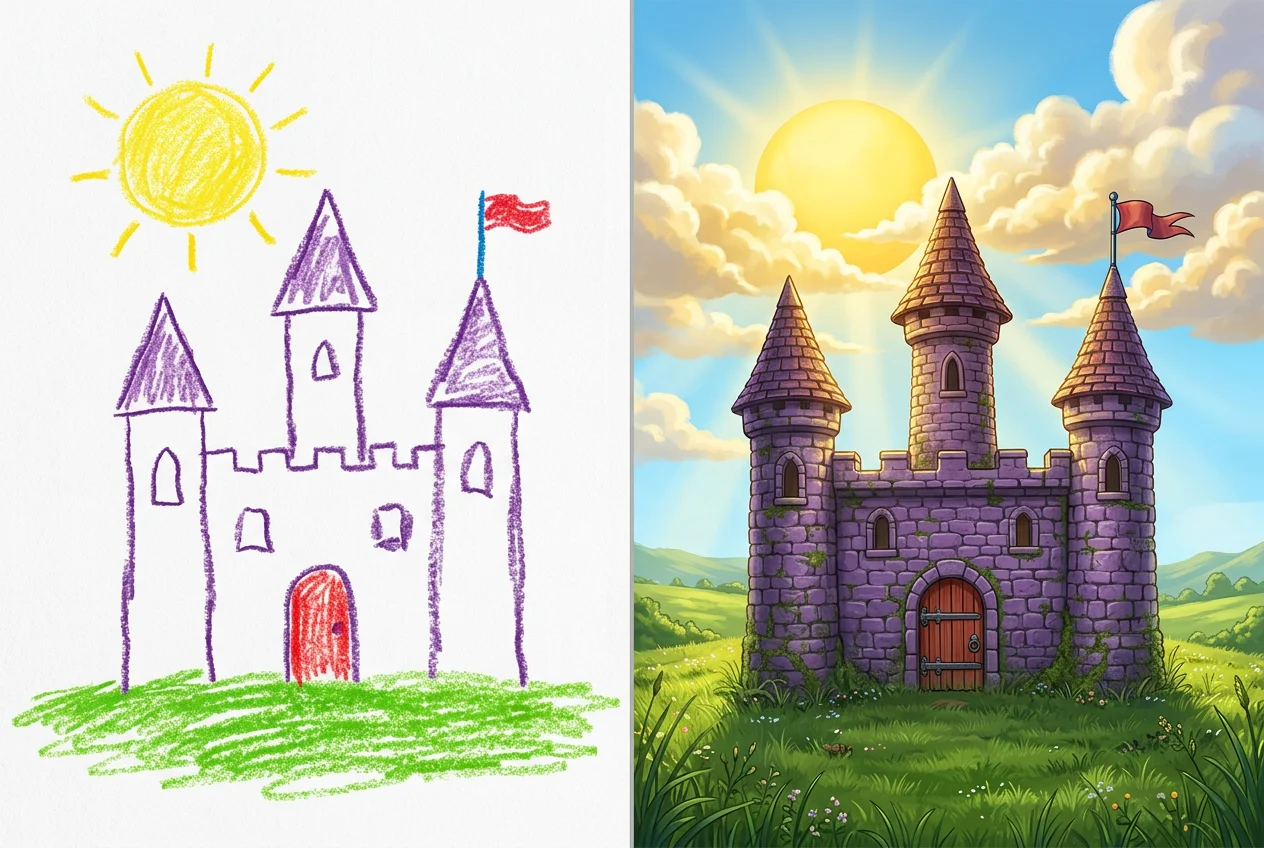
This isn’t about replacing the child’s work. It’s about showing them that their ideas have value, even when their hands can’t quite keep up. Parents consistently report that children draw more after seeing their first transformation — a positive feedback loop of create, transform, and create again. For more on how this process works in practice, see our guide on how to turn kids’ drawings into art.
2. Exploring Diverse Art Styles Through Their Own Art
Most children’s exposure to art is limited to picture books and classroom projects. AI tools open the door to a much wider world of artistic traditions — and they do it through the child’s own work, making the experience personal and memorable.
With a kids creativity app, a single drawing can become:
- Anime — bold lines and vibrant colours from Japanese animation
- Watercolour — soft washes and flowing brushstrokes
- Claymation — tactile, three-dimensional, like a stop-motion film
- Pixar-style 3D — polished rendering worthy of the big screen
- Realistic — lifelike detail that brings imagination into reality
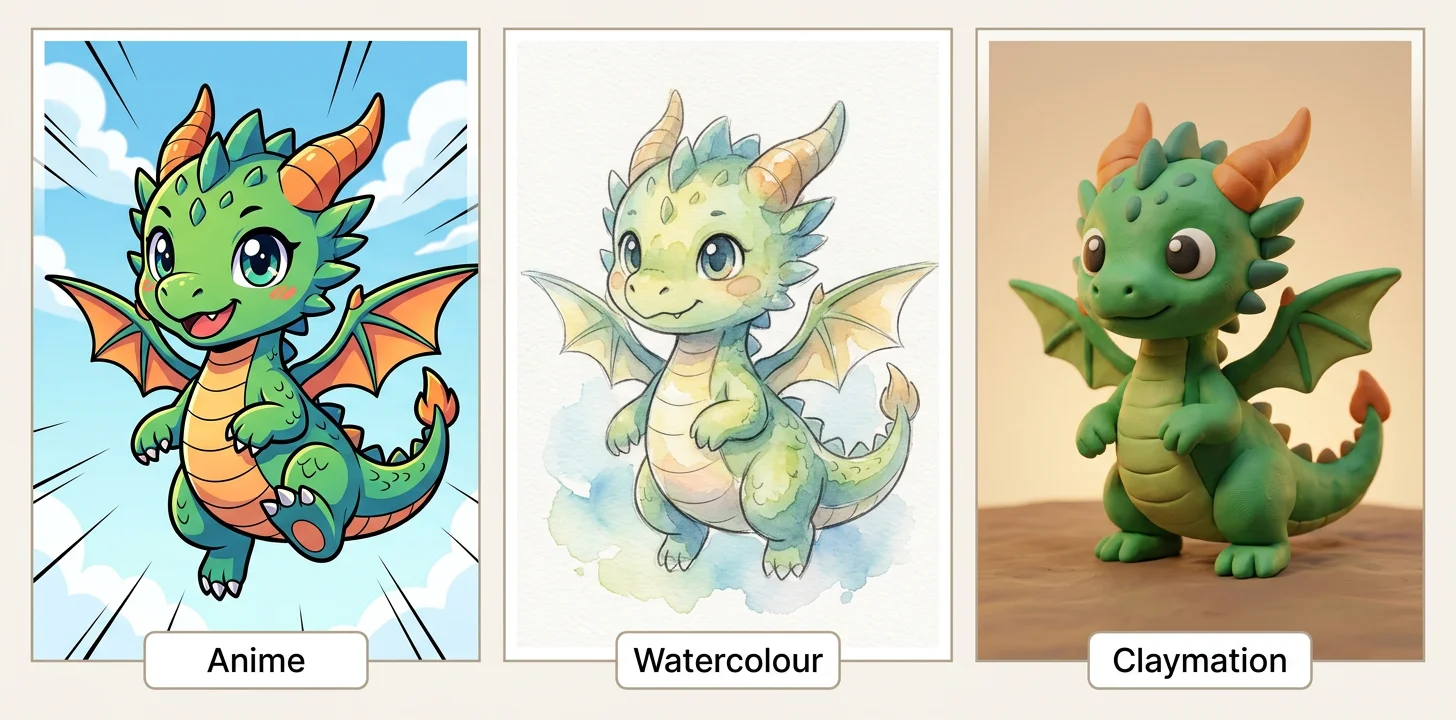
This hands-on exploration builds visual literacy and cultural awareness in a way that passively viewing art in a museum cannot. When your child’s own dragon appears in a Japanese anime style and then as a Renaissance oil painting, they begin to understand that art is a language with many dialects — and that their creative voice can speak in any of them.
3. Creating Without Fear of Failure
Around ages 7-9, something shifts. Children start comparing their drawings to their peers’ work and to “real” art. Many quietly conclude they’re “not good at drawing” and stop creating altogether. Research on creative confidence shows that this self-assessment — nearly always premature — can shut down artistic expression for years.
AI creative tools change the dynamic. When every drawing is a starting point for transformation rather than a finished product to be judged, the pressure evaporates. A few quick lines become the seed for something elaborate. There’s no “bad” drawing — only ideas waiting to be explored.
This shift from product to process is exactly what child development experts recommend. Children learn to iterate: they draw, transform, adjust, and try again. Because the cost of experimentation is essentially zero, they take creative risks they’d never attempt on a blank sheet of paper. Over time, this builds the kind of creative confidence — a willingness to try, fail, and try differently — that benefits children far beyond art, in school, relationships, and eventual careers.
4. Turning Screen Time Into Creative Family Time
Let’s address the elephant in the room: screen time. Parents worry about it, and rightly so. But not all screen time is equal, and safe AI apps for kids can transform a device from a passive entertainment portal into an active creative tool.
The workflow is naturally balanced: your child draws offline with crayons, markers, or paint. Then you open the app together, snap a photo, and choose a style. In seconds, the drawing transforms — and the real magic begins. You talk about it. “Why did you choose those colours?” “What’s happening in this scene?” “Want to try it in a different style?”
This draw-transform-discuss cycle turns what could be isolated screen time into shared creative time. The physical drawing gets them away from the screen. The brief digital moment sparks conversation. And the discussion that follows — comparing styles, narrating stories, planning the next drawing — is exactly the kind of rich, language-building interaction that benefits young children most.
5. Building a Creative Portfolio That Grows With Them
Children’s paper drawings have a way of piling up, creasing, fading, and eventually disappearing. This makes it nearly impossible to appreciate how much a child’s art has evolved over months and years.
Digital transformation solves this naturally. Every piece of AI-transformed artwork is saved automatically, creating a growing archive of your child’s creative journey. Pull up their first drawing from six months ago and compare it to today’s work — the growth is often astonishing. Subjects become more complex, compositions more deliberate, creative choices more sophisticated.
This visible progress is deeply motivating for children. They can see that practice leads to improvement, that their creative voice is developing, and that their body of work tells a story of growth. Families find natural moments to celebrate milestones — a hundredth drawing transformed, a first self-portrait, a one-year art anniversary — turning creative development into something the whole family recognises and values.
What to Look for in a Safe AI App for Kids
With growing interest in AI creative tools, parents need clear criteria for evaluating safety. Not every app on the market is designed with children in mind. Here’s a quick checklist for choosing a safe AI app for kids:
- Content filtering — The app must have robust filtering to ensure every output is age-appropriate, regardless of what a child draws or inputs. No scary, violent, or inappropriate results, ever.
- Privacy protection — Children’s artwork and photos should be handled with the highest standards. Look for apps that minimise data collection and never share children’s content with third parties.
- Child-friendly design — The interface should be simple enough for a young child to navigate with minimal adult help. If it’s cluttered with menus and tiny buttons, it wasn’t built for kids.
- Encouraging, not replacing — The best tools make the child’s drawing the star. AI art for children’s drawings should feel like a celebration of their work, not a substitution for it.
- No predatory monetisation — Avoid apps with aggressive in-app purchases, ads, or dark patterns targeting children. Transparent, parent-friendly pricing is a must.
At DrawToLife, these principles guide everything we build. We believe children deserve creative tools that are safe, simple, and designed to amplify their imagination. For more on why nurturing drawing skills matters, read our post on why children’s drawing skills matter.
Getting Started Is Easier Than You Think
You don’t need art supplies, lesson plans, or technical knowledge. Here’s how to begin:
- Let them draw freely — no prompts, no expectations, just paper and whatever they want to create
- Try one transformation together and talk about the result
- Let them experiment with different styles and see which ones they love
- Make it a regular activity — even just 10 minutes a week builds creative habits
- Celebrate every creation — both the original drawing and its AI-transformed version
The beauty of AI art for children’s drawings is that it meets kids exactly where they are. It doesn’t ask them to be better artists. It takes what they’ve already created and shows them just how extraordinary their imagination really is.
Every child is creative. Sometimes they just need a tool that believes in their ideas as much as they do.