How to Encourage Kids to Draw (Even Reluctant Ones)
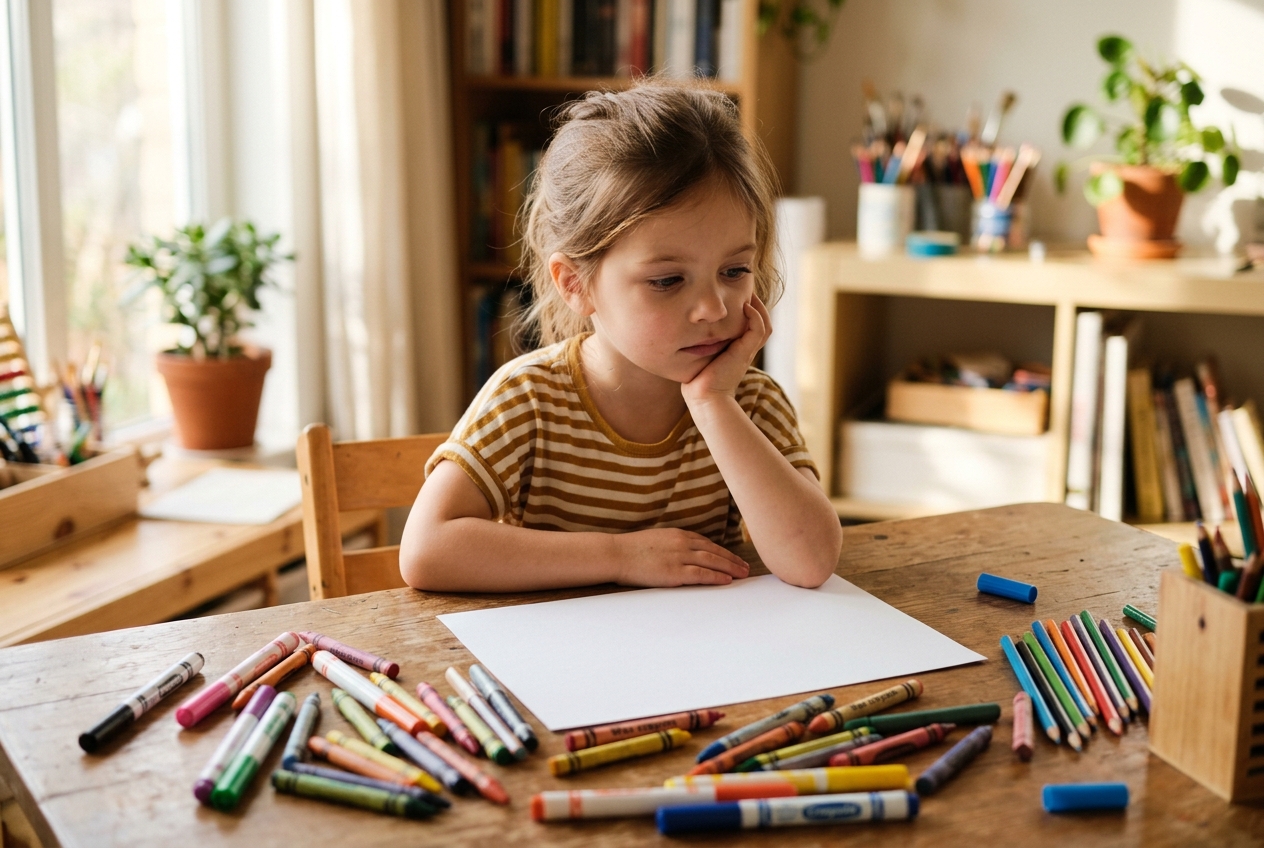
She used to draw for hours. Mermaids with six arms, houses floating in clouds, a family portrait where the dog was bigger than the car. Then one afternoon, somewhere around her seventh birthday, she pushed the crayons away and said the four words that break every parent’s heart: “I can’t draw good.”
If that sounds familiar, you’re not alone. Developmental psychologists have a name for this moment - the “crisis of realism” - and it happens to nearly every child between the ages of seven and ten. But it can show up earlier, sometimes as young as five, when a child starts comparing their drawings to their peers’ or to the polished images they see in books and on screens.
The good news? This isn’t the end of your child’s creative life. It’s a predictable stage, and how you respond to it makes an enormous difference.
Here’s how to encourage kids to draw - whether they’ve hit the confidence wall or simply need a little spark to get started.
Why Children Stop Drawing
Before we talk about solutions, it helps to understand what’s actually happening when a child loses interest in drawing.
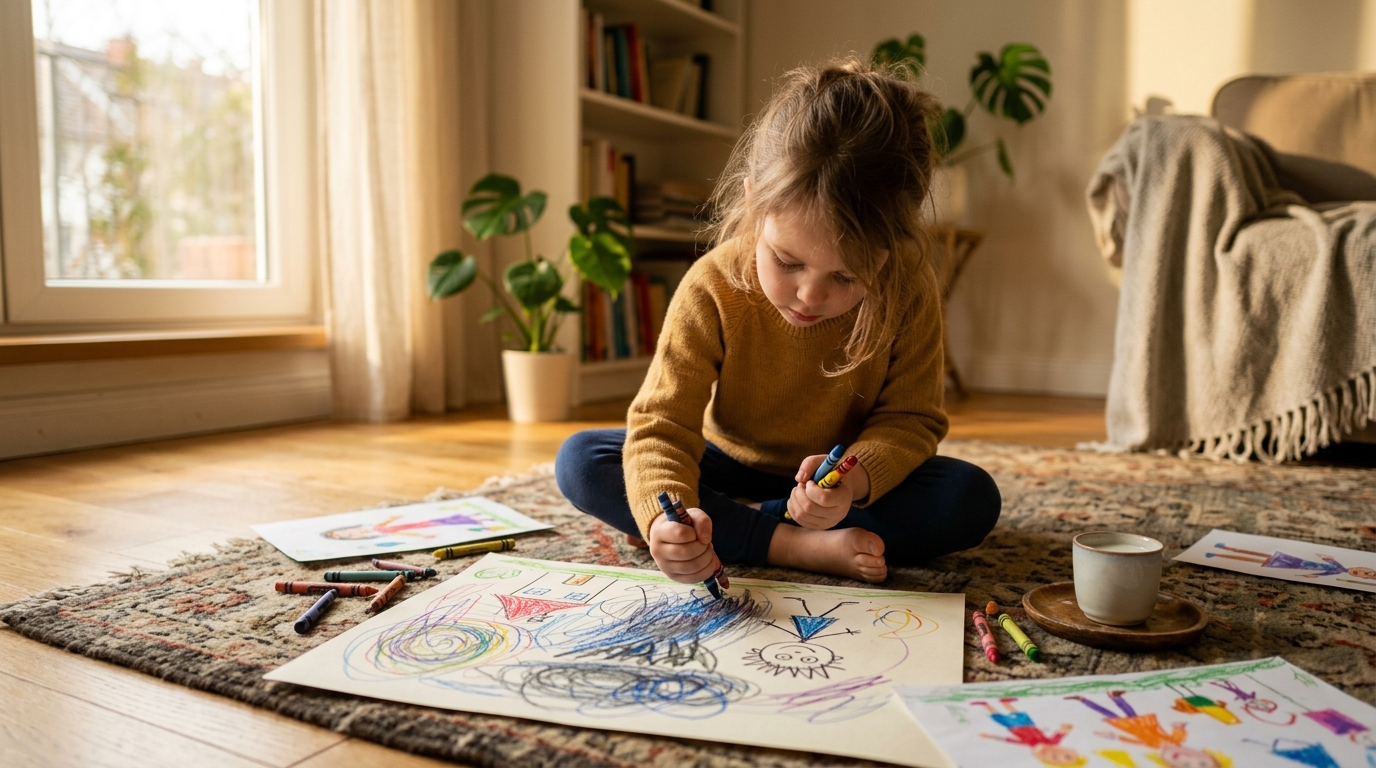
Between ages three and six, most children draw freely and joyfully. They make symbols for things they know - a circle for a head, a triangle for a roof - without worrying about whether those symbols look “right.” A scribble of green lines is a tree, and that’s that.
Then, around age seven, children develop more sophisticated visual awareness. They notice their drawings don’t match what they see in the real world or in picture books. Developmental psychologist Viktor Lowenfeld called this the “dawning realism” stage - the point where many children decide they’re “not good at art.”
This isn’t a failure of creativity - it’s a sign of cognitive growth. The child’s visual perception is maturing faster than their motor skills can keep up with. They can see what a horse should look like, but their hands can’t produce it yet. That gap feels frustrating, and frustration feels like failure.
Research published in the International Journal of Art & Design Education suggests that up to 85% of adults describe themselves as “not creative” or “unable to draw” - and most trace that belief back to childhood. When your child says “I can’t draw,” they’re experiencing a real developmental challenge, and they need your help navigating it.
Change the Conversation Around “Good”
The most powerful thing you can do when a child says “I can’t draw” is to gently dismantle the idea that drawings need to be “good” in the first place.
Children absorb the message that art has a correct outcome from everywhere - school assessments, colouring books with pre-drawn outlines, well-meaning adults who say “that doesn’t look like a dog.” By the time they hit the realism crisis, they’ve internalised a narrow definition of artistic success: does it look like the real thing?
Your job is to broaden that definition - not through empty praise (“that’s amazing!” can actually backfire by raising the stakes), but through genuine curiosity about their creative choices.
“Tell me about this drawing” is infinitely more useful than “that’s beautiful” or “what is it?” When your child explains that the red blob is actually a volcano erupting chocolate lava, they’re reconnecting with the imaginative joy that made drawing fun in the first place. The drawing isn’t a test to pass. It’s a story to tell.
Research from Project Zero at Harvard supports this. Their work on “studio thinking” shows that children who value artistic process - experimentation, reflection, revision - develop more resilient creative identities than those focused only on the finished product.
Remove the Blank Page Problem
A blank sheet of paper can be the most intimidating thing in the world for a reluctant artist. It demands creation from nothing, which is exactly the kind of open-ended challenge that makes self-doubting children freeze.
The fix is beautifully simple: give them a starting point.
Draw a wobbly line and ask them to turn it into something. Print a photograph and ask them to draw what happens next. Give them a sheet with random shapes scattered across it and challenge them to connect them into a creature. Start a drawing yourself and pass it over halfway through for them to finish.
These “creative constraints” work because they shift the task from “create something from scratch” to “respond to what’s already there.” That’s a fundamentally different cognitive challenge - one that feels more like play and less like performance.
For children who’ve hit the confidence wall, the constraint approach can be transformative. They’re not being asked to prove they can draw. They’re being invited to play with what’s already on the page. The pressure dissolves, and creativity flows back in.
Draw Together (and Draw Badly on Purpose)
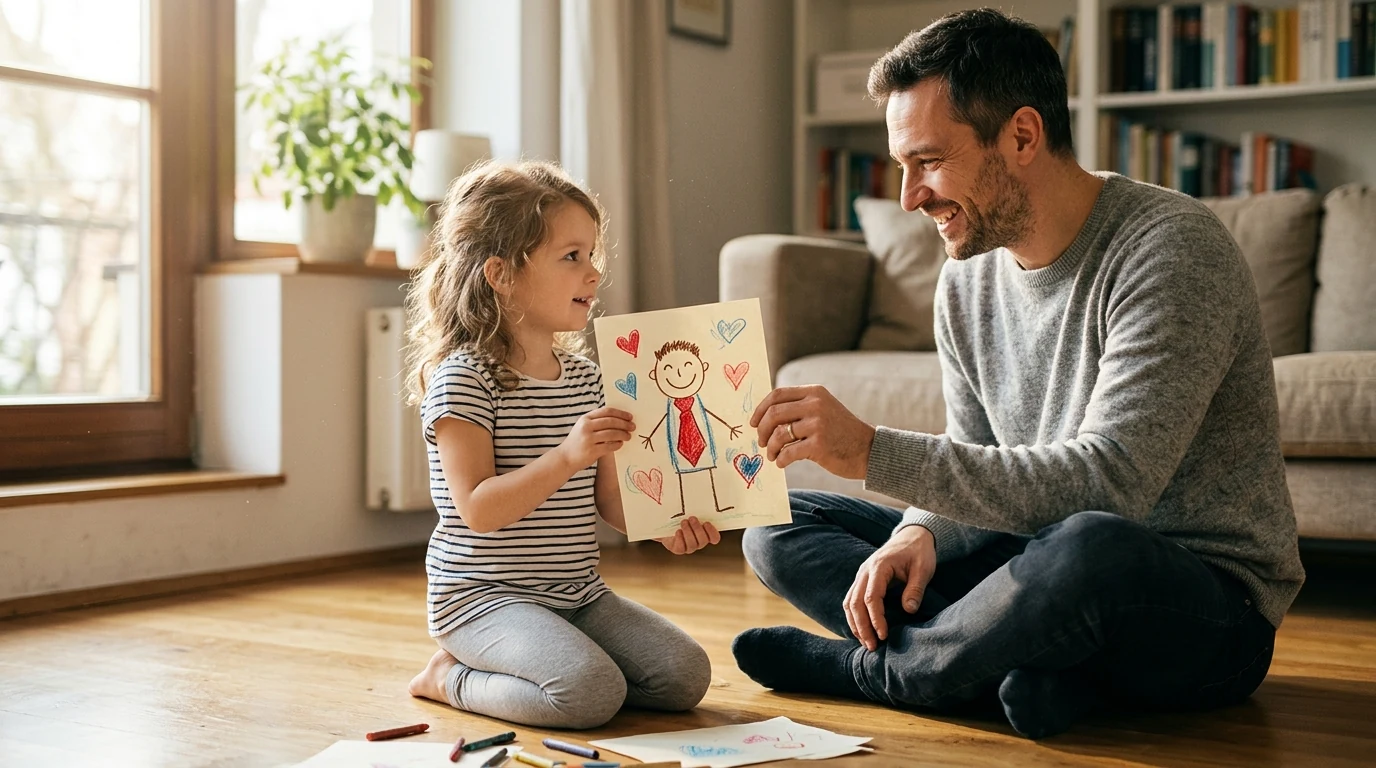
One of the most effective ways to encourage kids to draw is to draw alongside them - and to be visibly, cheerfully imperfect at it.
If children never see you draw, they absorb the message that drawing is something you grow out of. If they see you draw confidently, they may feel intimidated. But if they see you draw enthusiastically but imperfectly - laughing at your wonky elephant, genuinely trying to figure out how to draw a bicycle - they learn that drawing isn’t about being good. It’s about enjoying the attempt.
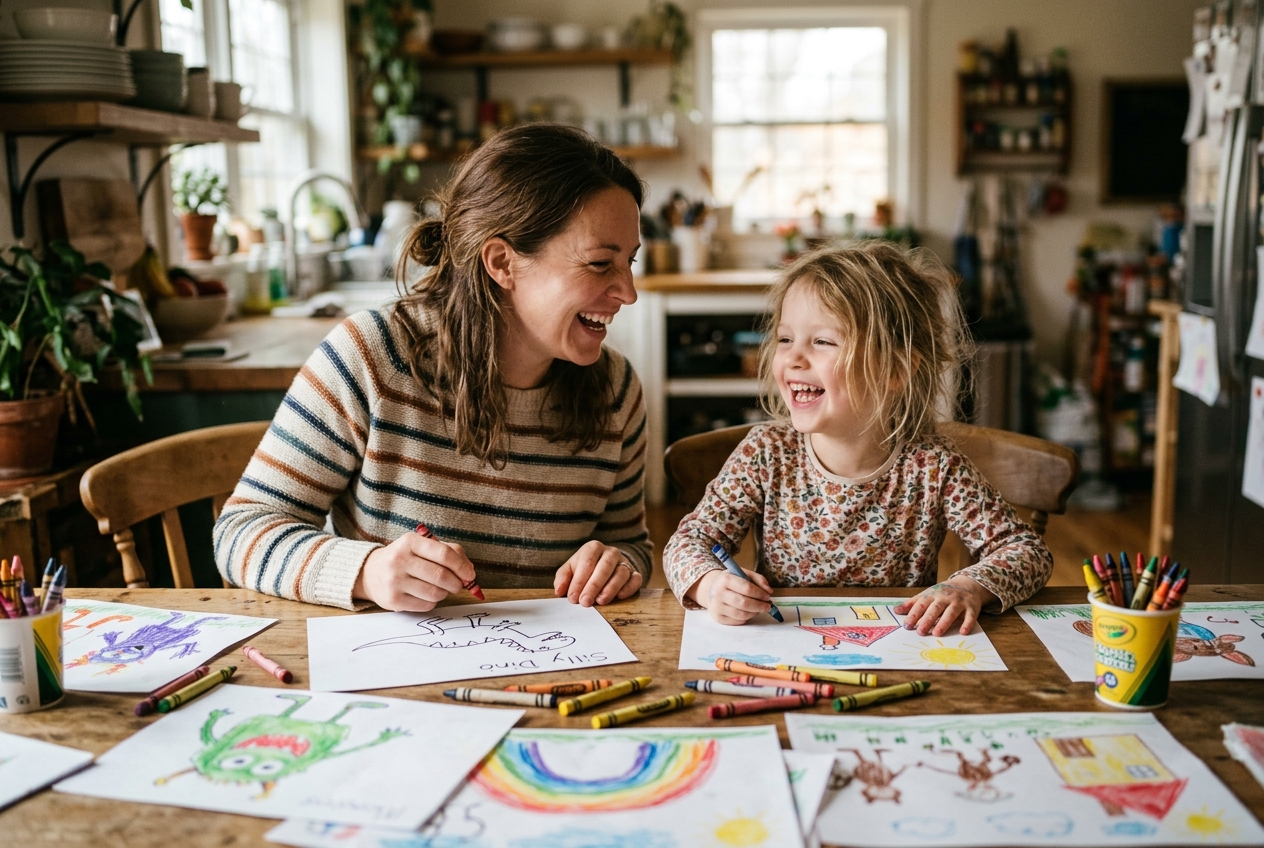
A 2020 study in Early Childhood Research Quarterly found that children were significantly more willing to attempt creative tasks after watching an adult struggle and persist with the same task. The key wasn’t the adult’s skill - it was their attitude. Adults who narrated their process (“Hmm, that leg looks funny, let me try again”) produced children who were more resilient in their own creative attempts.
So grab a crayon and draw something terrible. Talk about it with genuine delight. Your child is watching, and what they’re learning has nothing to do with how well you draw a horse.
Celebrate What They Choose to Draw, Not How Well They Draw It
When a reluctant child does pick up a crayon, the subjects they choose are windows into their inner world. A child who draws nothing but racing cars is telling you something about what excites them. A child who draws monsters might be working through fears.
The temptation is to steer children toward “better” subjects or correct their technique. Resist it. A child who spends a month drawing nothing but spiders is deeply engaged - and that engagement is far more valuable than variety or technical skill at this age.
To gently expand their repertoire, build on their interests rather than replacing them. “Your spider drawings are brilliant - want to draw the web it lives in? Or the fly it’s about to catch?” This respects their passion while naturally introducing new challenges.
Use Tools That Make Their Vision Visible
Part of what makes the realism crisis so painful is the gap between vision and execution. Children can imagine something magnificent but can’t make their hands produce it - and that gap feels like proof that they’re bad at art.
AI art tools designed for children - like DrawToLife - bridge this gap. They take a child’s crayon drawing and transform it into polished artwork that matches their original vision. When a reluctant drawer sees their “bad” drawing become something they’re genuinely proud of, it reframes the entire experience. The drawing wasn’t bad at all - it was the blueprint for something amazing. For a deeper look at how this works, see our guide to how AI helps kids express their creativity.
This doesn’t replace building drawing skills, but it keeps children in the game during the vulnerable period when they’re most likely to quit. A child who feels like an artist keeps drawing. A child who feels like a failure stops.
Make Drawing Part of Daily Life, Not a Special Event
Children who draw regularly are less likely to develop performance anxiety around it. When drawing is an everyday activity - as normal as reading or playing outside - there’s no pressure to produce something impressive. It’s just something you do.
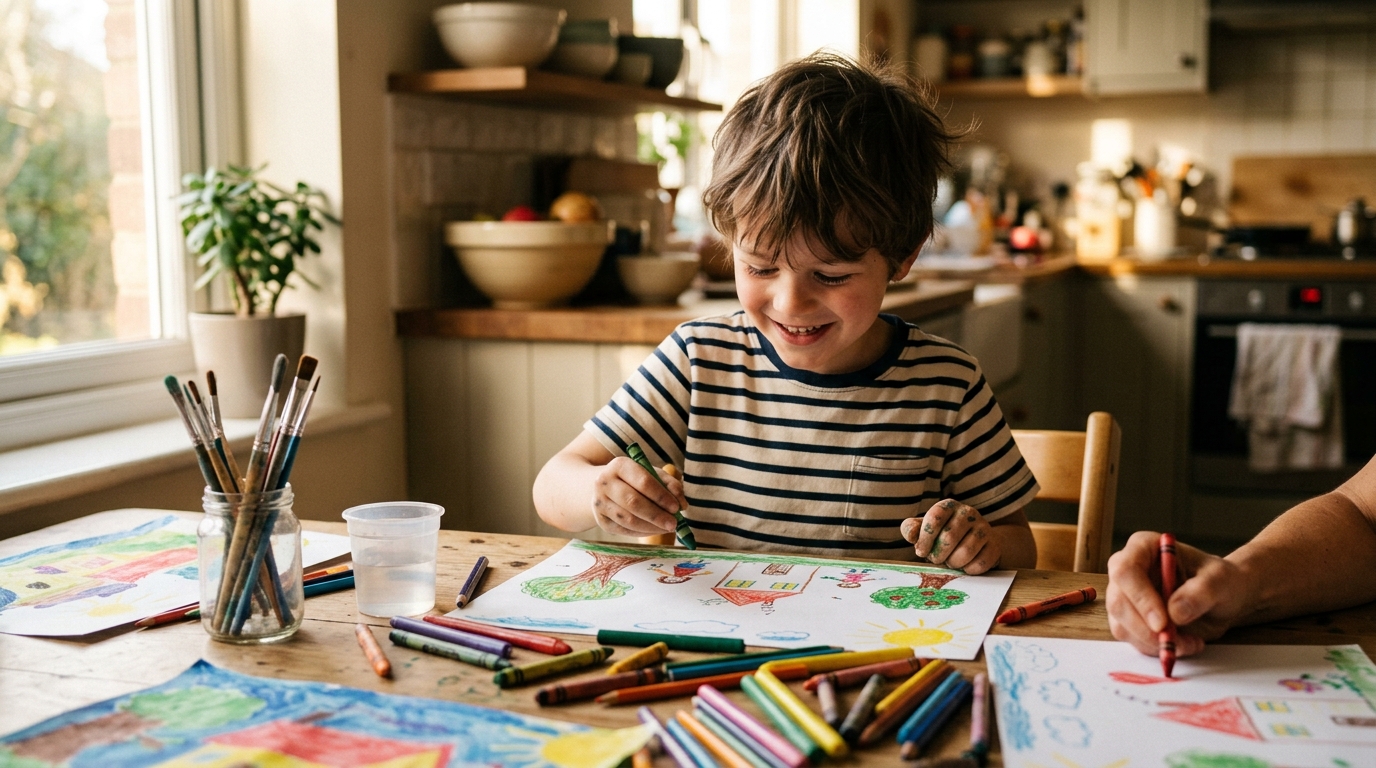
Keep art supplies visible and accessible, not packed away in a cupboard. Put paper and crayons on the kitchen table before breakfast. Leave a sketchbook in the car. Tape a big sheet of paper to the playroom wall and let it accumulate marks over days.
Draw in the margins of daily life: shopping lists with doodles, illustrated thank-you notes, portraits of the dog (who never holds still, so of course the drawing looks wonky, and that’s hilarious rather than frustrating).
When drawing is woven into everyday moments rather than reserved for “art time,” children experience it as communication rather than performance. This is where reluctant drawers rediscover their confidence - not in a formal lesson, but at the breakfast table with a crayon and a cereal box to sketch.
What Not to Say (and What to Say Instead)
Language matters enormously when you’re trying to encourage kids to draw. Small shifts in how you talk about art can make a surprising difference.
Instead of “What is it?” - try “Tell me about your drawing.” The first question implies the drawing should be identifiable. The second invites storytelling. A child who’s asked “what is it?” hears a test. A child who’s asked “tell me about it” hears an invitation.
Instead of “That’s beautiful!” - try “I can see you worked really hard on this” or “I love all the detail you put in the wings.” Generic praise raises stakes. Specific observations show genuine attention and model the kind of looking that builds visual literacy.
Instead of “Draw me a…” - try “What do you feel like drawing?” Assigning subjects puts children in execution mode. Open-ended invitations put them in creative mode.
Instead of “The sky should be blue” - try absolutely nothing. Children’s colour choices are often emotional and symbolic. A green sky might mean it’s a magic world. Correcting it teaches them that creative choices need external approval.
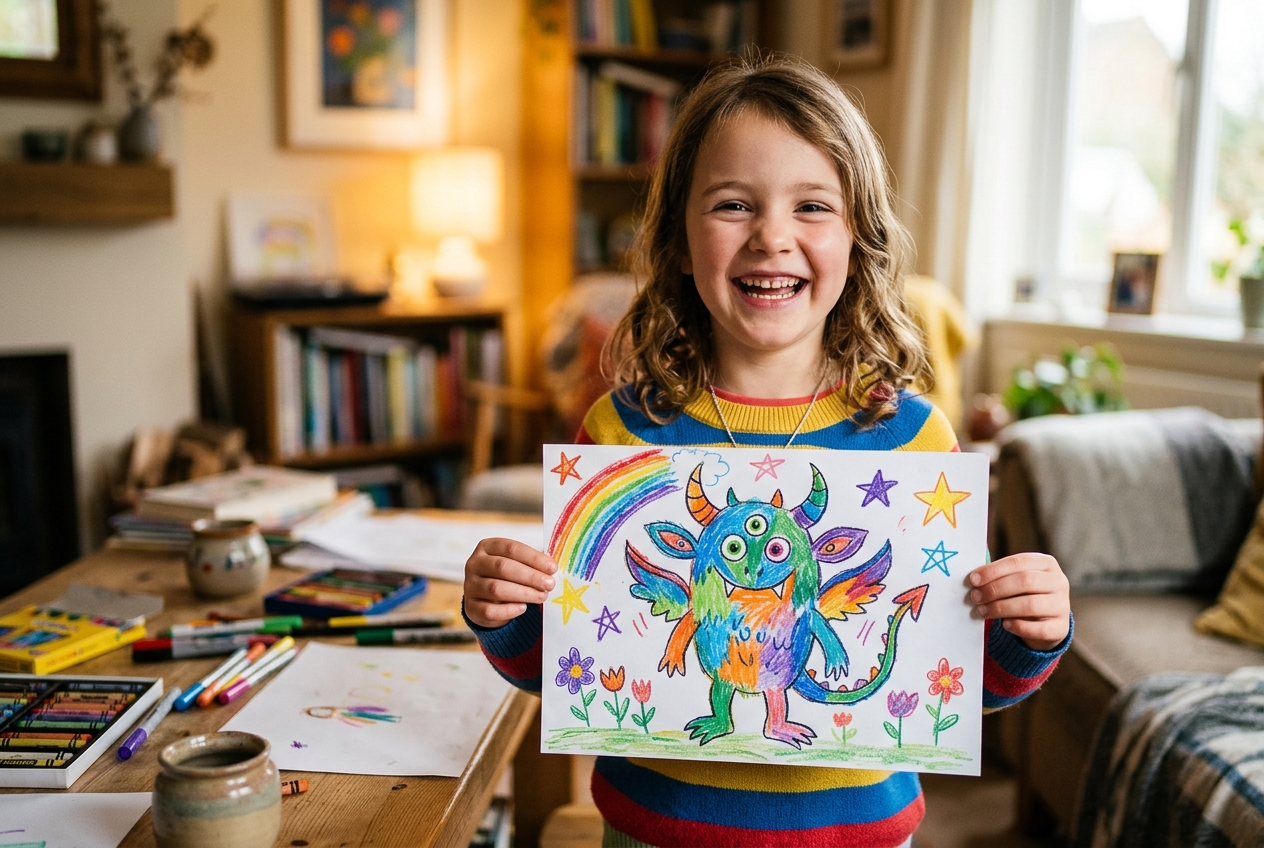
Instead of “You’re so talented!” - try “You’re getting so much better at drawing faces” or “I can see the difference from last month.” Talent-based praise (“you’re talented,” “you’re a natural”) has been shown by Stanford psychologist Carol Dweck’s research to undermine persistence. Children who believe their ability is a fixed trait give up more quickly when they struggle. Process and growth-based praise builds the mindset that skills develop with practice.
The Long Game
Here’s the thing about encouraging kids to draw: it’s not really about drawing. It’s about teaching children that creative expression is a normal, valuable part of being human. That their ideas deserve space. That struggling with something doesn’t mean you’re bad at it. That the process of making something - anything - is worth doing for its own sake.
Children who learn these lessons through drawing carry them into everything else: writing, music, problem-solving, building, cooking, and eventually into whatever work and life throw at them. Drawing skills matter for development in ways that go far beyond art.
So the next time your child pushes the crayons away, don’t panic. Sit down, pick up a crayon yourself, draw a hilariously bad giraffe, and invite them to do better. They probably will. And the laughter that follows might just be the thing that brings them back to the table tomorrow.