Kids Art Display Ideas That Celebrate Creativity
There’s a moment every parent knows. Your child runs toward you, paper flapping, eyes wide, shouting “Look what I drew!” You admire it, stick it on the fridge with a magnet, and within a week it’s buried under a school newsletter and a takeaway menu. Two months later, it’s in the recycling.
Meanwhile, your child remembers that drawing. They remember the purple horse with wings. They remember being proud of it. And they notice when it disappears.
How you display your child’s art sends a quiet but powerful message about how much you value their creativity. The good news? You don’t need a degree in interior design or a Pinterest-perfect home to do it well. Here are some practical kids art display ideas that turn everyday drawings into something the whole family can celebrate.
Why Displaying Children’s Art Actually Matters
Before we get to the how, let’s talk about the why — because this isn’t just about decoration.
Research from the University of Cambridge found that children who see their creative work valued and displayed show higher levels of creative confidence and are more willing to take artistic risks. When a child’s drawing earns a prominent spot on the wall rather than a temporary place on the fridge, it tells them: your ideas deserve space in our home.
This connects directly to what developmental psychologists call “creative self-efficacy” — a child’s belief that they can produce meaningful creative work. Every drawing that gets framed, hung, or carefully displayed reinforces that belief. And children who develop strong creative self-efficacy early tend to maintain it through the tricky self-conscious years of ages 8-10, when many children stop drawing altogether.
If you’re curious about why those drawing skills matter so much in the first place, our deep dive into why children’s drawing skills matter covers the research in detail.
The Rotating Gallery Wall
This is the single best kids art display idea for most families, and it’s surprisingly easy to set up.
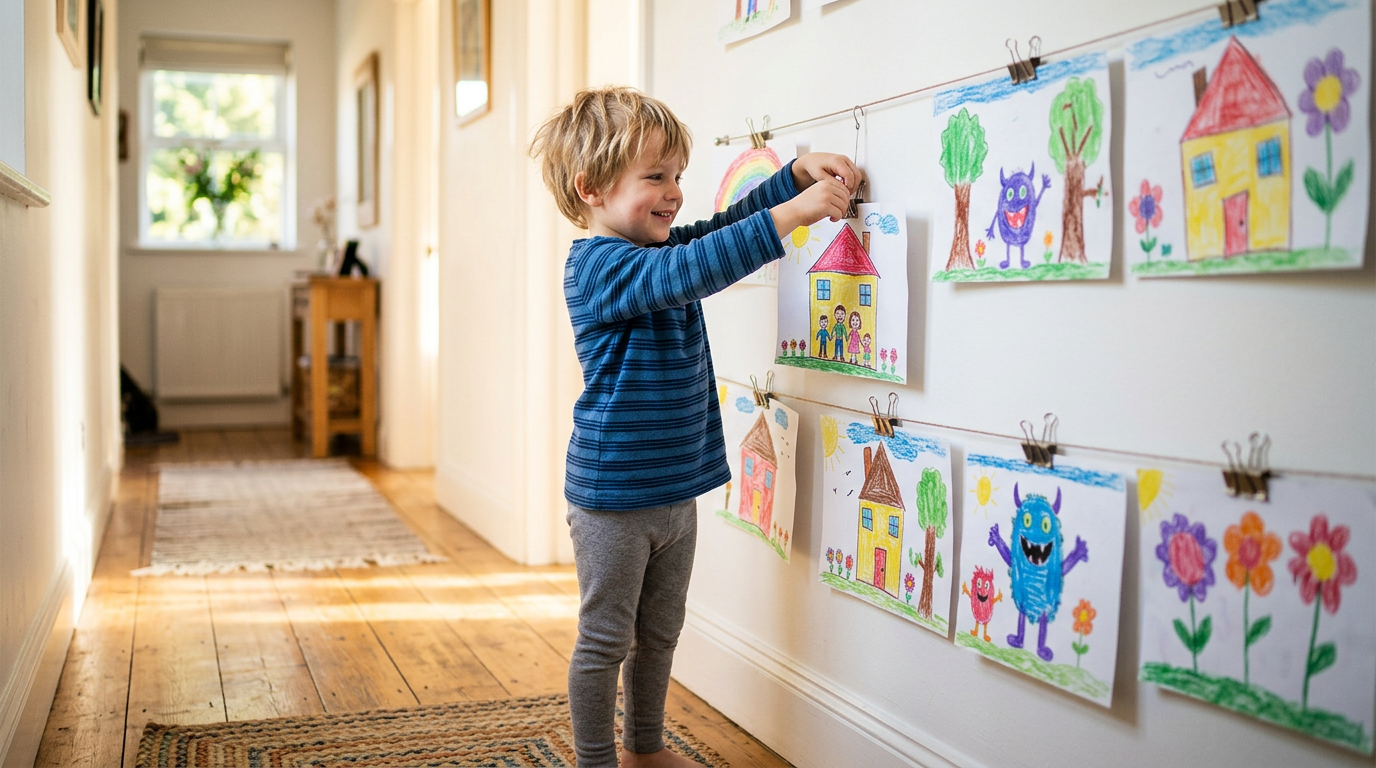
Pick a wall — ideally somewhere your child passes every day, like a hallway, their bedroom, or the kitchen. Install a simple wire-and-clip system, a set of wooden trouser hangers, or a row of colourful clipboards. The key is that artwork can be swapped in and out without frames, nails, or fuss.
The rotating part is what makes this work. Your child’s art evolves constantly, and the gallery should too. Set a rhythm — weekly or fortnightly — where your child chooses which pieces go up and which come down. This turns the gallery into an active, ongoing project rather than a static display, and it gives your child agency over how their work is presented.
The pieces that come down don’t need to be thrown away. Keep a dedicated portfolio box or folder for retired gallery pieces. Over time, this becomes a beautiful archive of your child’s creative development — something you’ll both treasure years from now.
Frame the Favourites
Not every drawing needs a frame, but some absolutely deserve one. When your child creates something they’re especially proud of — the drawing they keep coming back to show you, the one they describe in vivid detail — that’s a framing moment.
You don’t need expensive custom framing. A simple, inexpensive frame from a charity shop or high street store works brilliantly. The frame itself sends the message: this piece is special. For children under six, the act of seeing their crayon drawing behind glass, hanging on a wall like “real art,” can be genuinely transformative for their creative confidence.
A few practical tips for framing children’s art:
Choose frames with easy-open backs so you can swap artwork as new favourites emerge. White or light-coloured mats work best — they make the colours in children’s drawings pop without competing for attention. Group framed pieces in odd numbers (three or five) for a gallery-style arrangement that looks intentional, not cluttered.
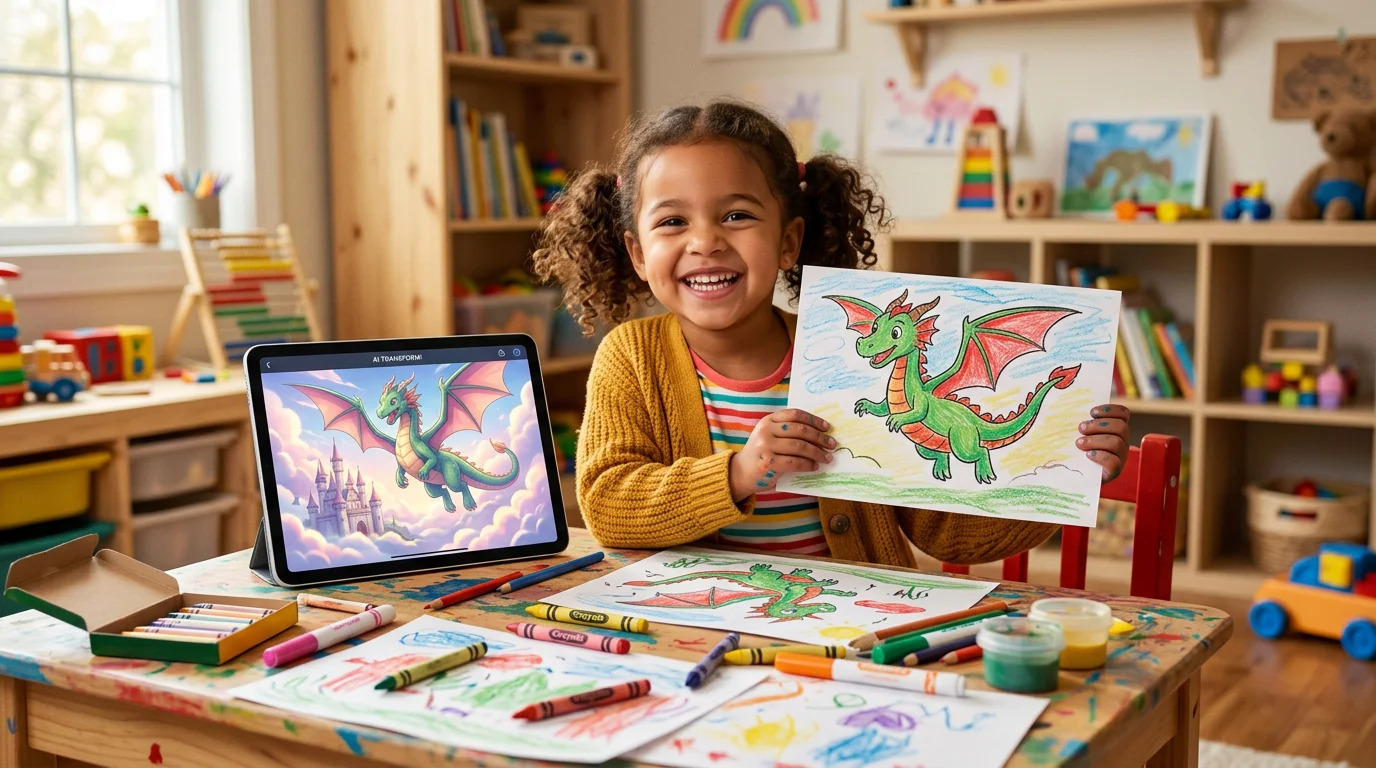
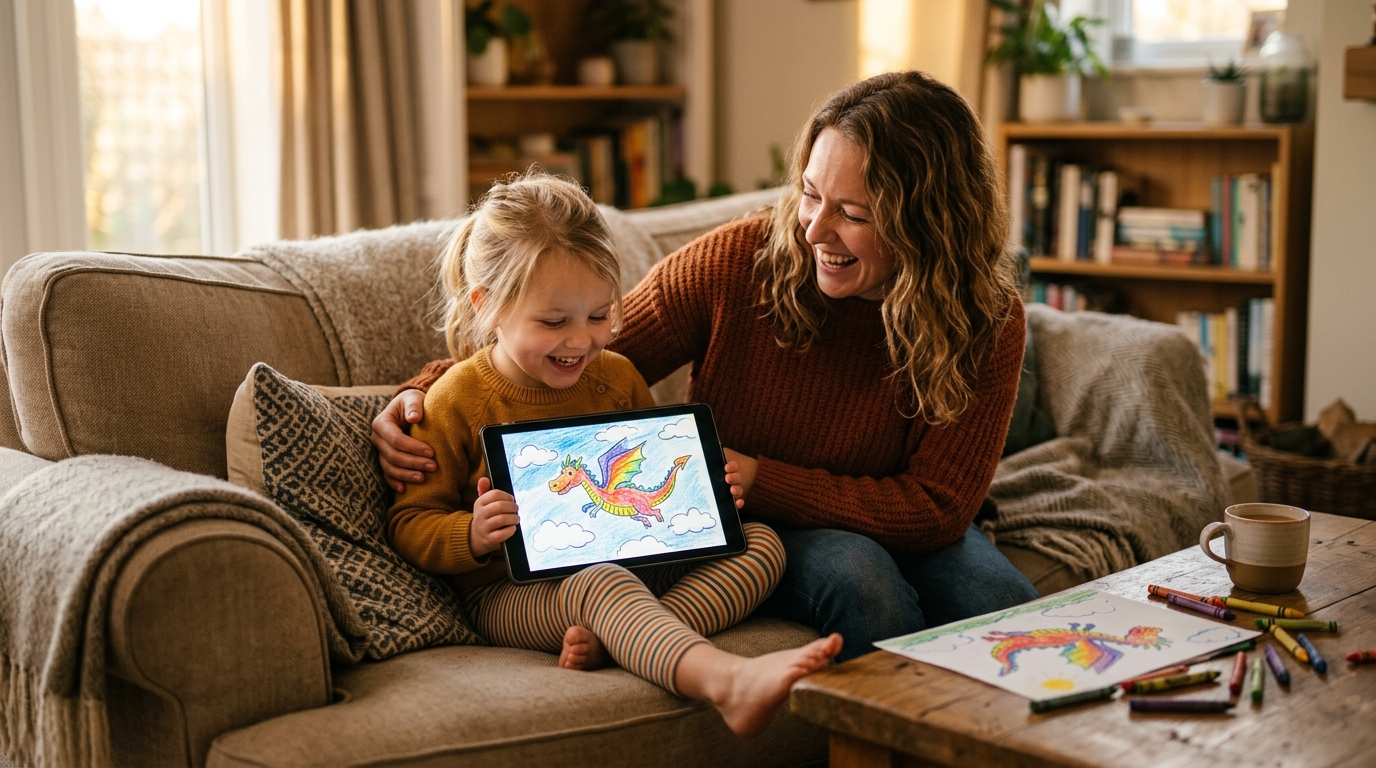
For drawings that start as physical crayon sketches and get transformed into polished digital art through tools like DrawToLife , consider printing and framing the original alongside its AI-transformed version. The before-and-after pairing tells a wonderful story about your child’s imagination — and children absolutely beam when they see both versions hanging side by side.
The Art Clothesline
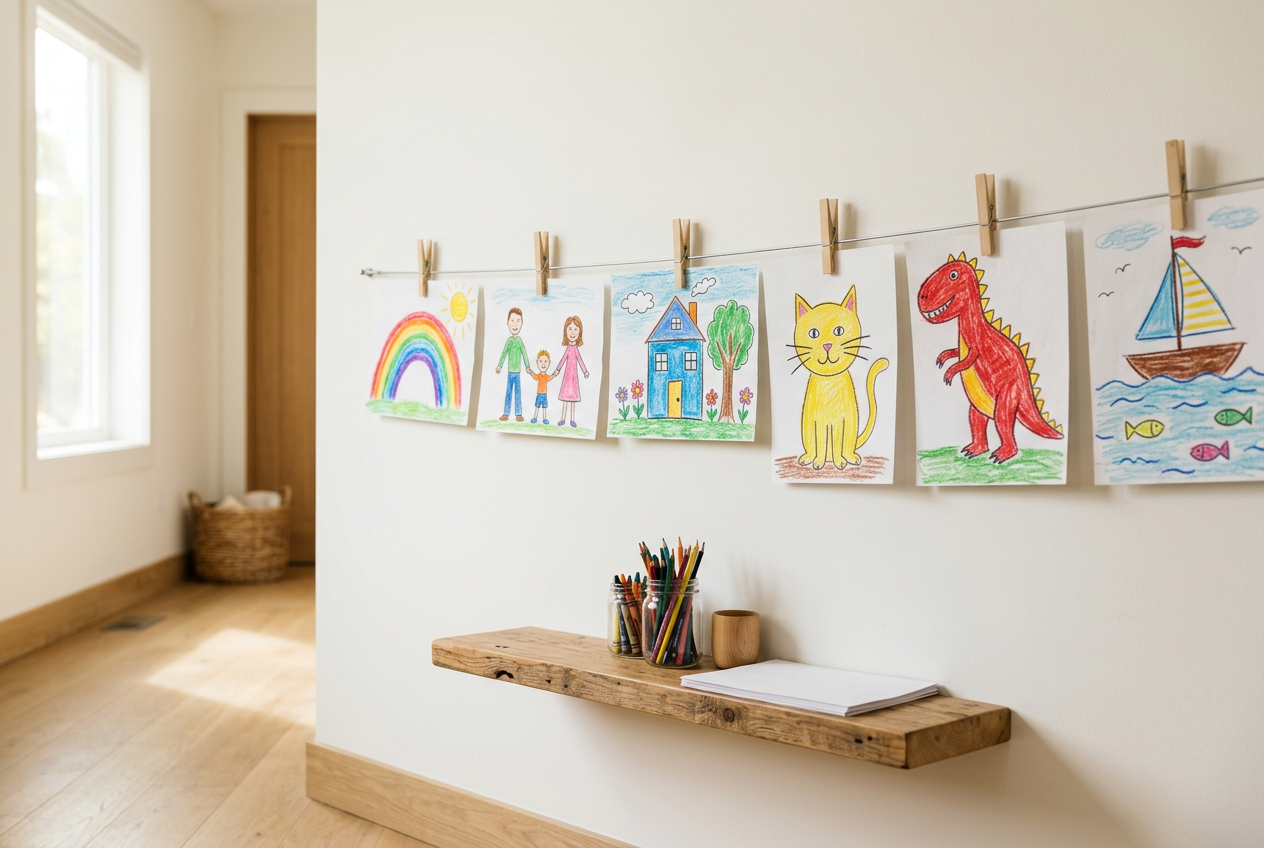
Simple, charming, and perfect for younger children’s prolific output. String a length of twine, ribbon, or fairy lights across a wall and use mini wooden pegs to clip drawings along it. This works especially well in playrooms, bedrooms, and kitchen corners.
The beauty of the clothesline is its informality. It signals “all art is welcome here” rather than “only your best work makes the cut.” For three and four-year-olds who produce dozens of drawings a week, this means everything gets its moment in the spotlight — scribbles, colour experiments, and carefully rendered stick figures alike.
You can theme the clothesline by colour, by subject, or by date. Some families create a “this week’s art” line that refreshes every Sunday. Others let it grow organically until it’s full, then photograph the whole display before starting fresh. Either way, the clothesline keeps art visible and celebrated without requiring any commitment to permanence.
Digital Display: The Modern Art Gallery
Physical display is wonderful, but it has limits — wall space runs out, paper fades, and some of your child’s best work lives on a tablet or phone screen. A digital photo frame offers a brilliant solution.
Load a digital frame with photos of your child’s artwork — both the physical originals and any digital transformations. Set it to rotate through the collection, and suddenly you have an ever-changing gallery that showcases months or years of creative work in a single frame. Place it on a bookshelf, a mantelpiece, or the kitchen counter where the whole family can enjoy it.
This approach solves one of the biggest challenges parents face: the sheer volume of art children produce. You can photograph and preserve everything digitally, even when the physical originals eventually need to move on. Grandparents love receiving these digital galleries as gifts, too — a dedicated frame loaded with their grandchild’s artwork is far more meaningful than another scented candle.
The Artwork Ledge
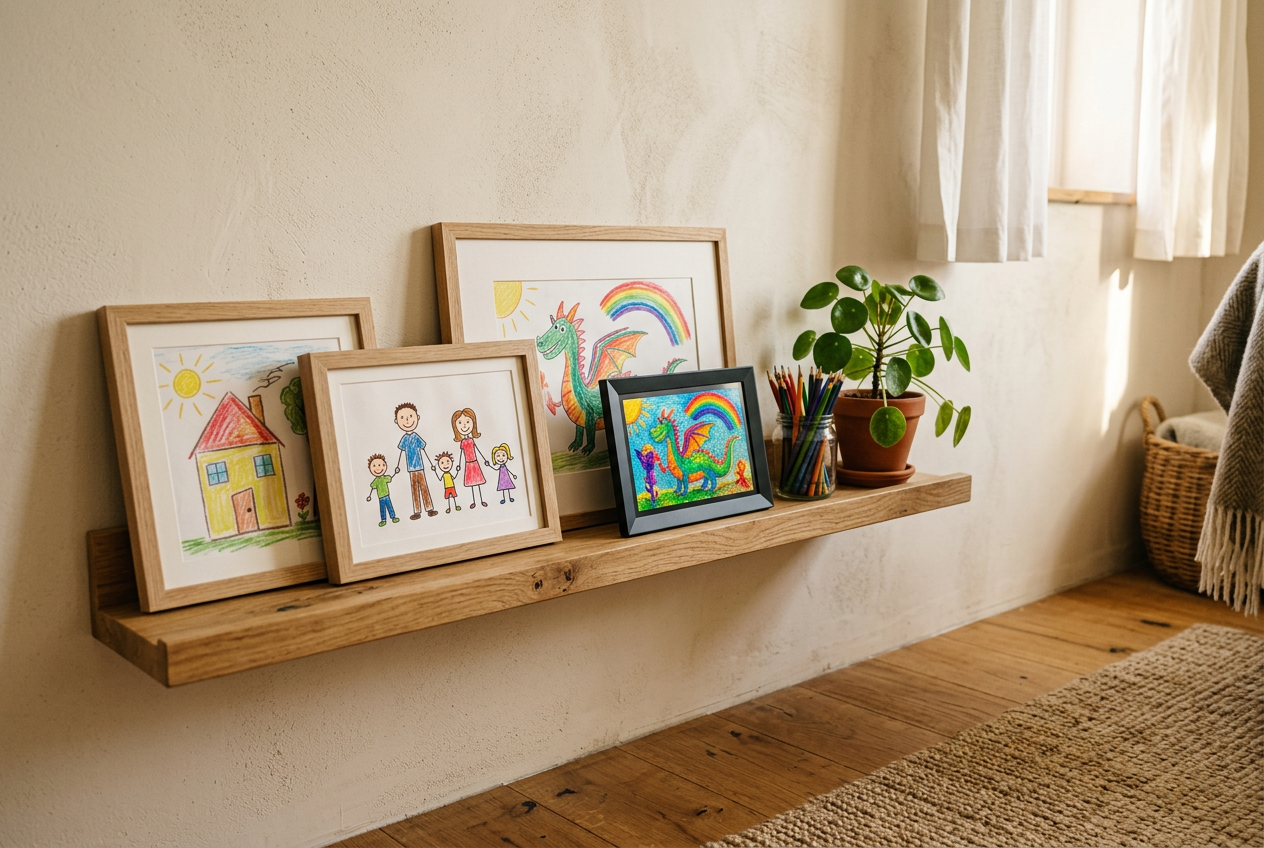
Picture ledges — those narrow shelves originally designed for leaning framed photos — are perfect for displaying children’s art. Mount one (or several) at your child’s eye level and lean framed or unframed artwork along it.
The beauty of the ledge is flexibility. Unlike hung frames, artwork on a ledge can be rearranged, layered, and swapped in seconds. Your child can curate their own display, moving pieces forward or back, adding new work, and creating their own compositions. It’s a mini gallery they physically control.
Mount the ledge low enough for your child to reach. This is their gallery, and they should be able to interact with it independently. Some families install two ledges — one at child height for the artist’s own curation, and one higher up for parent-selected favourites. The combination creates a display that both generations are invested in.
Making It a Family Ritual
The display method matters less than the ritual around it. The most impactful thing you can do is create a regular moment where art gets celebrated and displayed together.
Maybe it’s Sunday evening, after baths, when you and your child review the week’s drawings and choose what goes up on the gallery wall. Maybe it’s a monthly “art opening” where the family gathers with biscuits and juice to admire the new exhibition. Maybe it’s as simple as a Friday afternoon ritual of photographing the week’s art before refreshing the clothesline.
Whatever form it takes, the ritual communicates something children need to hear regularly: your creative work is important to this family. We make time for it. We celebrate it.
This is also a natural moment to talk about art with your child. Not evaluating it — not “that’s beautiful” or “what is it?” — but genuinely engaging with it. “Tell me about this one. Why did you choose these colours? What’s happening in this scene?” These conversations, sparked by the act of displaying art together, build the kind of rich creative dialogue that fuels further drawing. For more on how to have these conversations, our guide to fun drawing activities for kids has some wonderful prompts.
Preserving Art Beyond the Walls
Even the best gallery wall can only hold so much. Here’s how to preserve the overflow without letting it pile up in a guilt-inducing stack:
The portfolio box. A simple A3-sized box or folder, one per year. At the end of each year, sit with your child and select the ten or fifteen favourites to keep. The selection process itself is a lovely exercise in reflection — your child will remember drawings they’d forgotten and rediscover creative phases they’ve moved past.
Photo archive. Photograph every drawing before it leaves the display. A dedicated album on your phone or a shared family cloud folder creates a searchable, permanent record. Some parents take this further by creating annual photo books of their child’s art — a tangible keepsake that captures an entire year of creative growth in one volume.
Digital transformation. This is where technology adds something physical preservation can’t. When you transform a crayon drawing into polished digital art — through AI tools designed for children’s artwork — you create a version that’s vibrant, shareable, and printable at any size. The original crayon drawing goes into the portfolio box; the transformed version becomes a print on the wall, a card for grandparents, or a phone wallpaper that brings a smile every time you unlock your screen. It’s a way of honouring the original while giving it new life. Tools like DrawToLife make this process simple and safe for children aged 3-8, turning the act of preserving art into another creative adventure.
Quick-Start Guide: Your First Art Gallery in 15 Minutes
You don’t need a weekend project. Here’s how to set up a simple gallery right now:
Grab a length of string or ribbon and six mini pegs. Pin the string along a wall at your child’s eye height — bedroom, hallway, or kitchen all work. Let your child choose six drawings to clip up. Stand back and admire together.
That’s it. Fifteen minutes, no tools, no trips to the shops. You can upgrade to a wire system, clipboards, or frames later. The important thing is starting — giving your child’s art a home on the wall tonight, not next weekend.
Tomorrow, when your child hands you their latest masterpiece, you won’t need to fish for a fridge magnet. You’ll point to the gallery and say, “Where do you want to hang it?” And that small moment — your child choosing a spot for their own art, stepping back to see it displayed — is worth more than any frame you could buy.
Their creativity deserves a place in your home. It always has. Now it has one.