Rainy Day Drawing Ideas That Keep Kids Creating
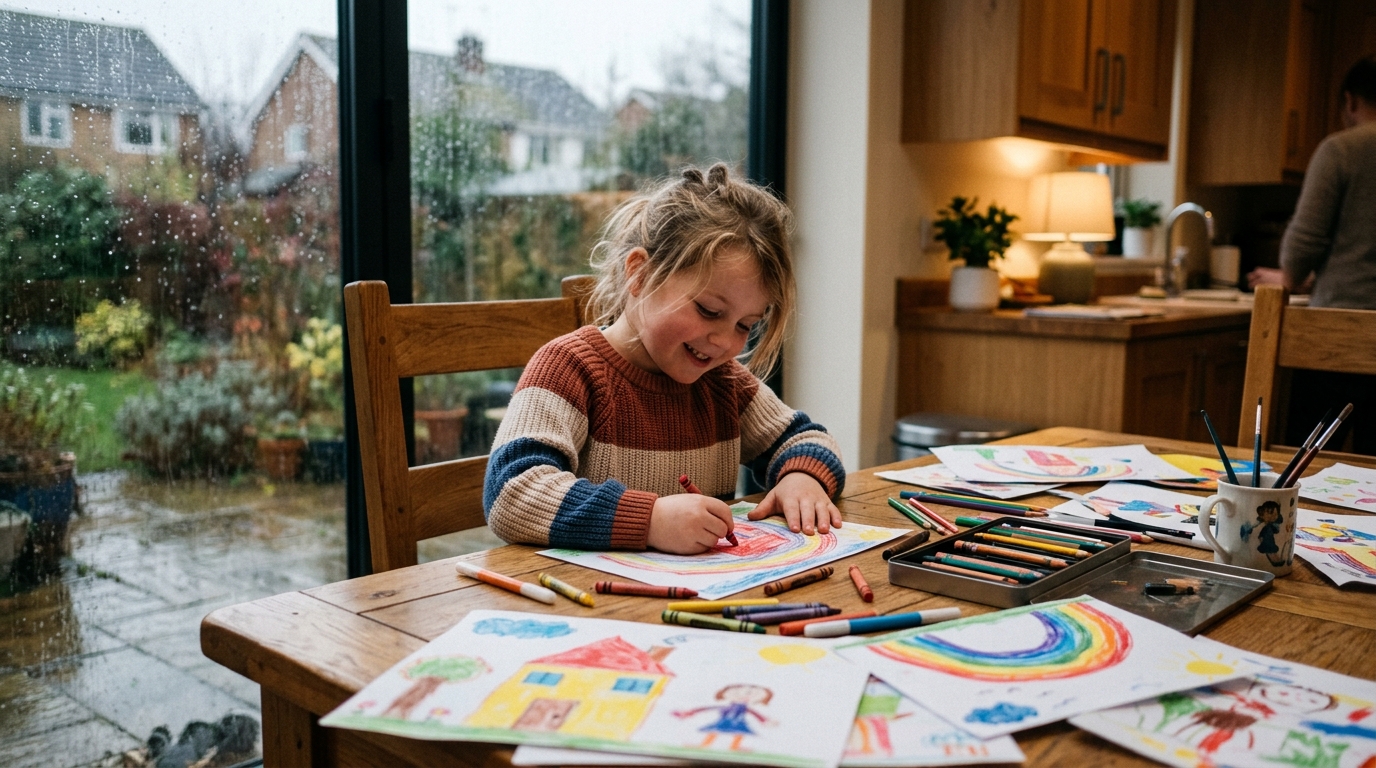
The rain is hammering against the windows, the garden is a swamp, and your five-year-old is standing in the hallway wearing wellies and a look of deep betrayal. “But you said we could go to the park.”
We’ve all been there. And somewhere around the third hour of an indoor day, the novelty of building-block towers wears thin and the screen starts calling. But here’s the thing: rainy days are secretly brilliant for drawing. No sunshine competing for attention, no rush to get outside — just a kitchen table, some supplies, and the kind of unhurried time that creativity actually needs.
These aren’t generic “give them a colouring book” suggestions. These are rainy day drawing ideas for kids that spark genuine creative thinking, get the whole family involved, and — if you’re lucky — buy you enough time to drink a full cup of tea while it’s still warm.
The Rainy Day Drawing Box
Before we get to the ideas, a quick practical note: keep a dedicated “rainy day box” somewhere accessible. A shoebox or plastic tub is fine. Stock it with crayons, markers, cheap watercolours, plain paper, coloured paper, sticky tape, scissors, and a glue stick. When the rain hits, the box comes out — and it instantly signals to your child that something creative is about to happen.
The ritual matters more than the contents. Research on creative environments suggests that having a predictable “creative setup” helps children transition into a creative mindset more quickly. It’s the same principle behind a writer sitting at their desk or a musician tuning their instrument — the routine primes the brain for making things.
Mystery Drawing Prompts
Write a dozen simple prompts on folded slips of paper and drop them into a jar. Your child picks one, unfolds it, and draws whatever the prompt suggests. The element of surprise removes the dreaded “I don’t know what to draw” problem entirely.
Good prompts for ages 3-5 keep things concrete and familiar: “a cat wearing a hat,” “the biggest cake in the world,” “a house where a dragon lives.” For ages 6-8, you can push into the abstract and silly: “what does Tuesday look like?”, “draw a machine that makes rainbows,” “design a new planet and the creatures who live there.”
The best part? You can make new prompts together, which is itself a creative exercise. Children love writing prompts that they know will stump their parents — and watching Mum or Dad struggle to draw “a penguin riding a skateboard through space” is half the fun.
Window Drawing Weather Reports
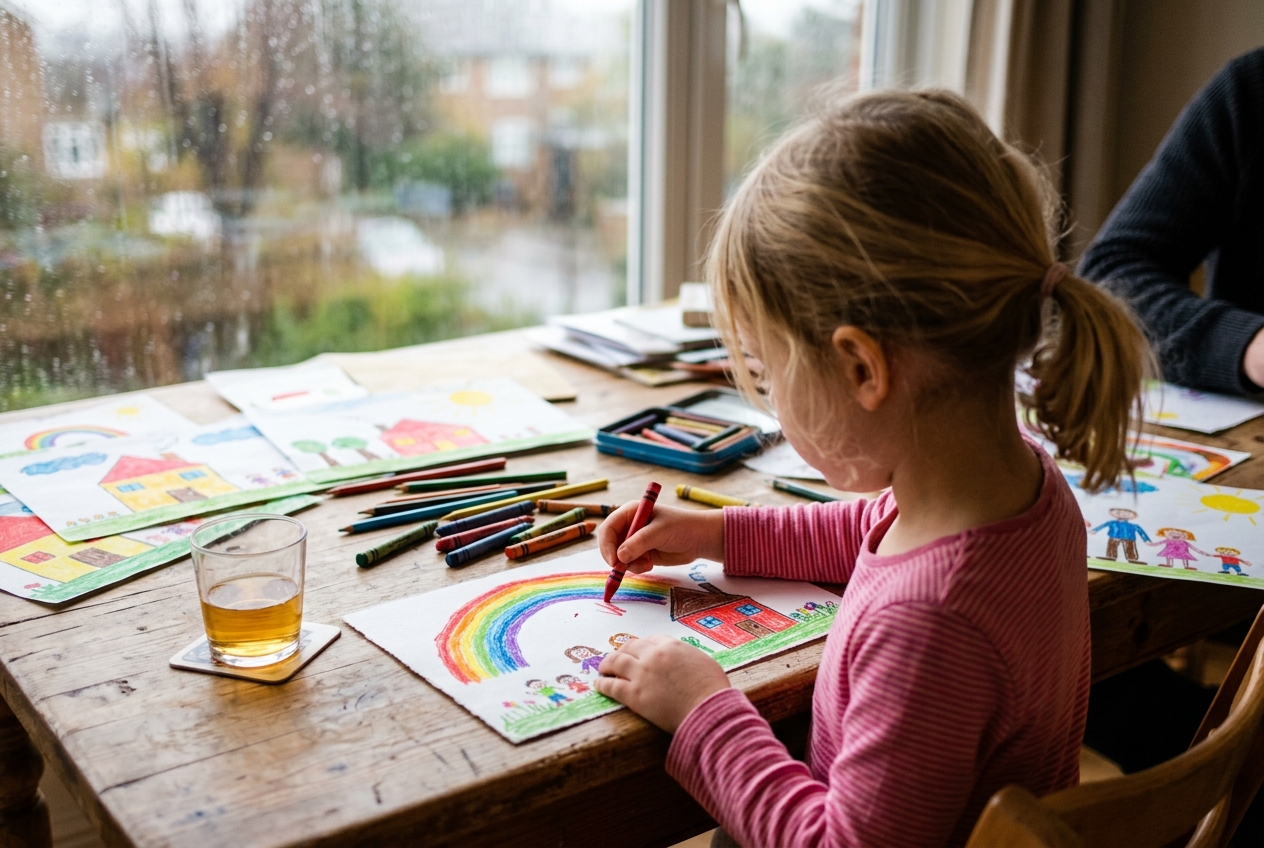
This one is perfect for rainy days specifically. Give your child a window-facing seat and ask them to draw what they see outside — but as a “weather report.” They’re the meteorologist, and their drawing is the forecast.
Young children will draw the rain, the clouds, maybe a puddle. Older children might add temperature readings they invent, wind direction arrows, or predictions for tomorrow (“sunny with a chance of dragons”). You can make it a daily ritual during a rainy week, collecting the reports and comparing them at the end.
What makes this work is that it connects drawing to observation. Children learn to look more carefully at the world — noticing that rain doesn’t fall straight down when it’s windy, that clouds have different shapes and shades of grey, that puddles reflect things. This kind of observational drawing builds spatial awareness and attention to detail, skills that transfer well beyond art.
Collaborative Story Drawing
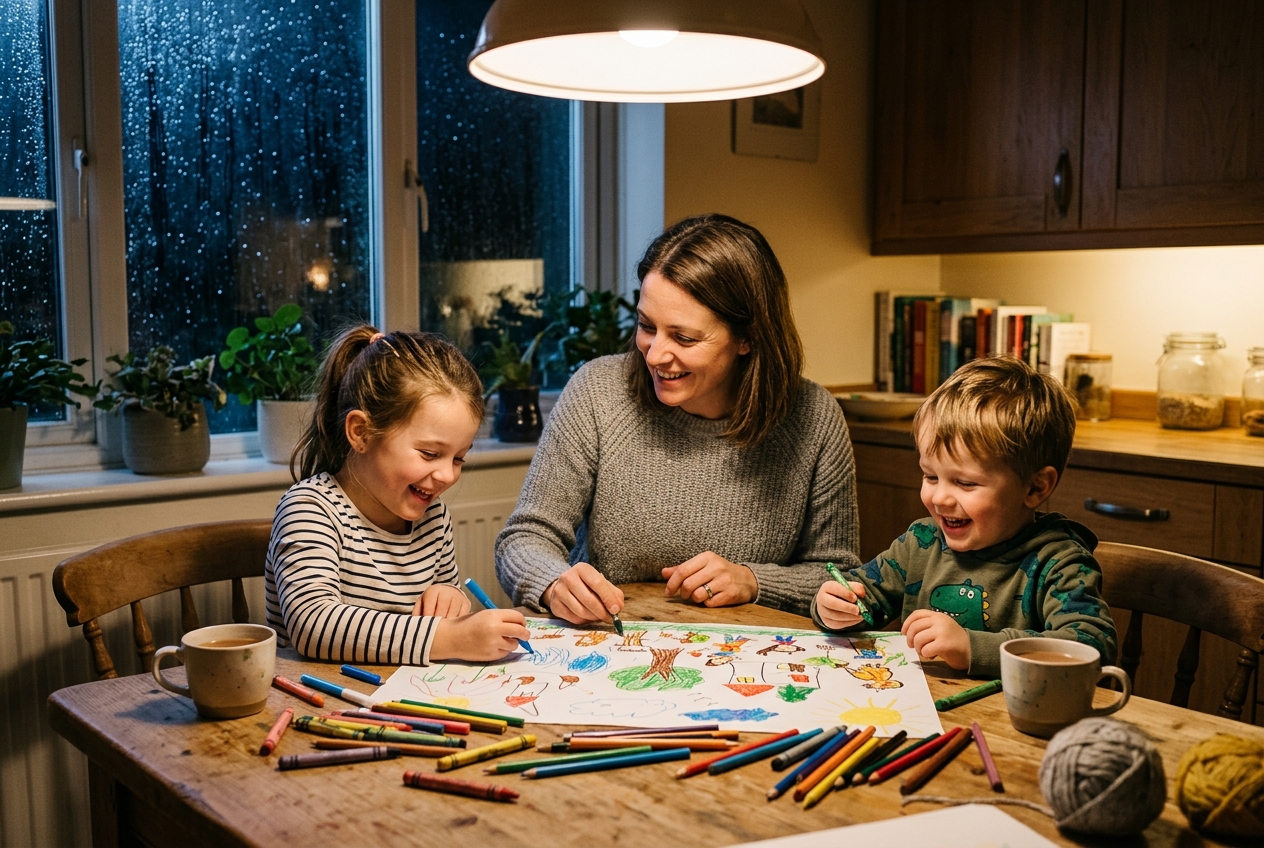
This is a family favourite that works beautifully with mixed ages. One person draws the first panel of a story — just a simple scene. The next person draws what happens next. Keep passing the paper around until you’ve filled a page.
The rules are simple: you can’t use words (except sound effects, because “BOOM” written in wobbly letters is always acceptable), and you have to continue the story, not start a new one. With younger children, you might narrate the story aloud as you go. With older ones, the fun is in the surprise of seeing how someone else interprets your setup.
A family we spoke to while developing DrawToLife told us their rainy-Sunday tradition was exactly this — and that their six-year-old’s story contributions were consistently more imaginative than the adults’. Children aren’t constrained by narrative logic, which means a story that starts with a dog walking to the shops can end with an underwater castle defended by friendly octopuses. That’s not a flaw in their storytelling. It’s the whole point.
The “Draw It From Memory” Challenge
Show everyone a simple object — a mug, a shoe, a houseplant — for thirty seconds. Then hide it. Everyone draws it from memory.
This sounds easy. It is spectacularly not easy, and that’s what makes it brilliant. Adults will struggle just as much as children, which levels the playing field and makes the whole exercise less about skill and more about paying attention. When you reveal the object again and compare it to the drawings, there’s always a moment of “I completely forgot it had a handle” or “I thought the leaves pointed up.”
For younger children (3-4), simplify: let them look at the object while they draw, but cover it after a minute and ask them to finish from memory. The partial-memory challenge is easier to manage and still builds the same observational muscles.
Texture Rubbing Adventures
Hand your child a crayon and a thin sheet of paper, then send them on a hunt around the house. Place the paper over any textured surface — a coin, a leaf, the sole of a shoe, a woven placemat — and rub the crayon across it. The texture appears like magic.
Children find this genuinely thrilling, especially the first few times. It feels like discovering a secret the object was hiding. Once they’ve collected six or seven rubbings, they can cut them out and combine them into a collage, or use them as the starting point for a drawing. A coin rubbing becomes the wheel of a car. A leaf rubbing becomes a tree. A shoe-sole rubbing becomes a city seen from above.
This activity is wonderful for children who say they “can’t draw,” because the textures do much of the visual work. It builds confidence while still exercising creativity in how they arrange and reimagine the rubbings.
Draw Your Dream Bedroom
Ask your child to design their perfect bedroom — no rules, no budget, unlimited imagination. A bed shaped like a pirate ship? A slide instead of stairs? A ceiling that looks like the night sky? A wall covered in their own art?
This prompt works across the full 3-8 age range because the complexity scales naturally. A three-year-old might draw a bed and a giant toy. A seven-year-old might produce a detailed floor plan with labelled sections, a reading nook, and a designated space for their pet hamster.
What makes this prompt particularly rich is that it combines creative drawing with spatial thinking and personal expression. Children are designing a space that reflects who they are and what they care about. You learn a lot about your child from what they include — and what they leave out.
Transform Drawings Into Something Extraordinary
Here’s where a rainy afternoon can become truly memorable. Once your child has created a few drawings they’re proud of, show them what happens when those drawings get transformed.
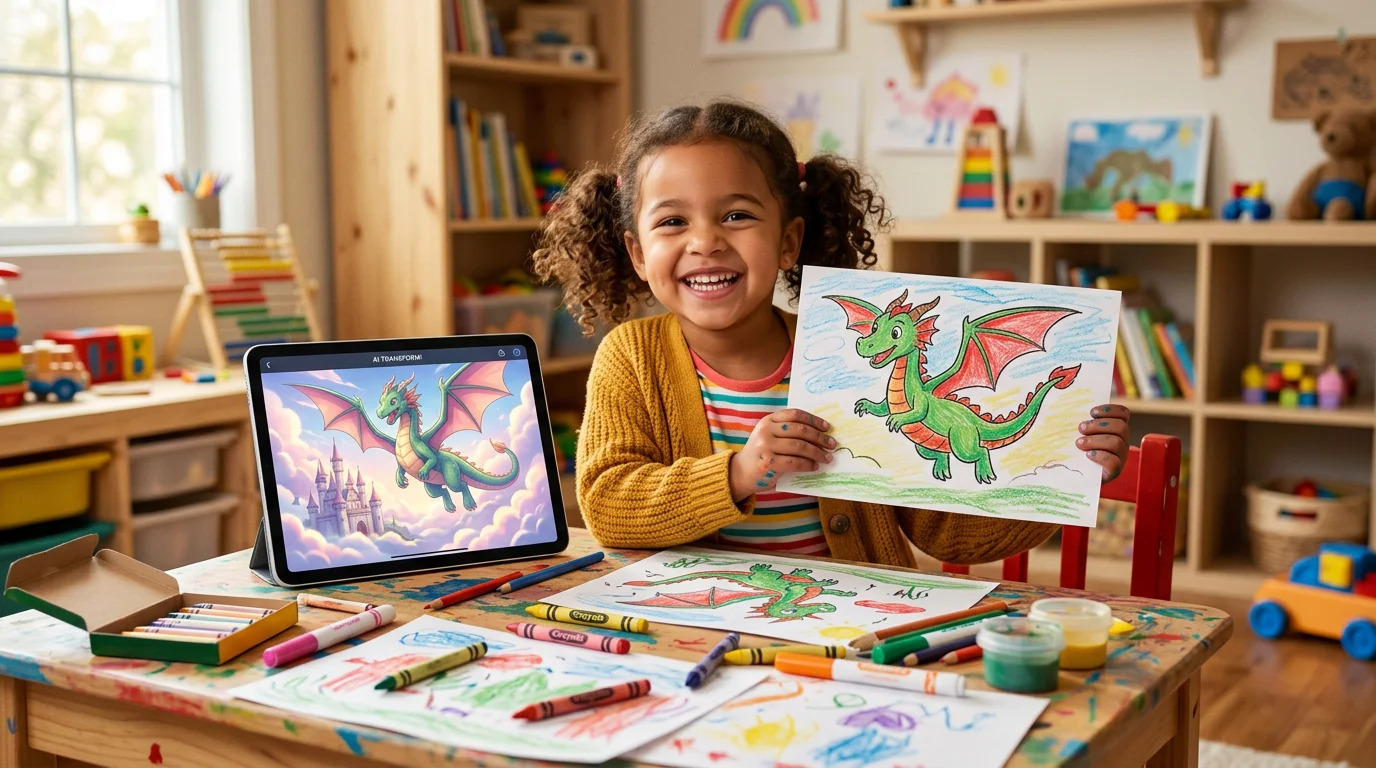
Tools like DrawToLife let children photograph their crayon drawings and watch them transform into polished artwork in styles like anime, watercolour, claymation, and more. The child’s original composition and imagination stay at the heart of it — but suddenly their wobbly dragon looks like it stepped out of a Pixar film.
The magic isn’t just in the transformation itself. It’s in the moment your child sees their own idea taken seriously, treated as something worthy of being made beautiful. That’s a powerful message for a young artist: what you made matters.
The Rainy Day Art Gallery
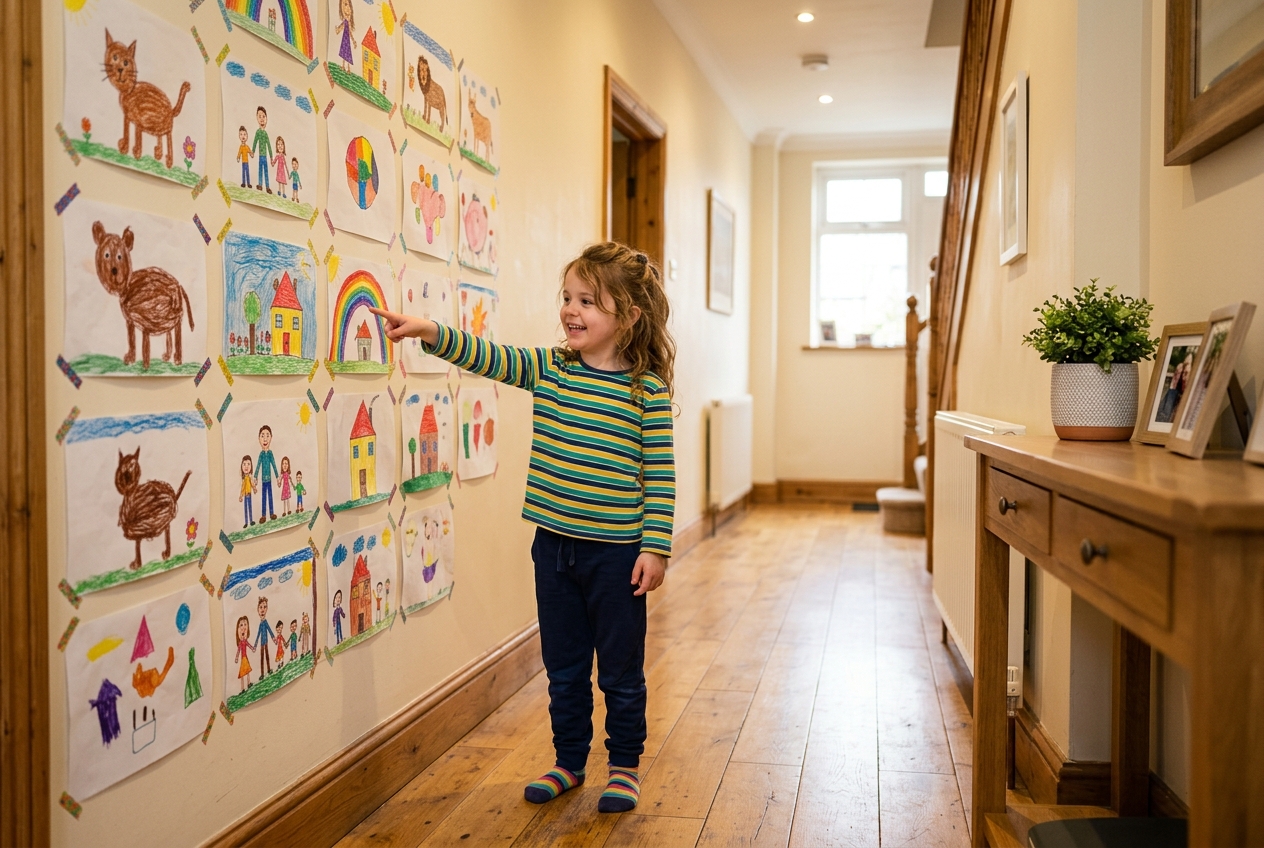
At the end of your drawing afternoon, turn your hallway or kitchen into a gallery. Tape the drawings to the wall, give each one a title card (your child dictates, you write — or they write it themselves), and do a “gallery walk” where everyone admires the exhibition.
If you want to take it further, serve juice in fancy cups and pretend it’s the opening night. Let your child be the curator who explains each piece to the visitors. You’ll be amazed at the stories behind drawings that you might have glanced at and seen as “just scribbles.”
Research on creative self-efficacy — a child’s belief in their own creative ability — shows that how we respond to children’s art matters enormously. Displaying their work, asking them to talk about it, and treating it with respect doesn’t just make them feel good in the moment. It builds the kind of creative confidence that stays with them.
Making Rainy Days the Best Days
The secret to a great rainy day isn’t fighting the weather. It’s leaning into the gift of unhurried indoor time. Drawing is perfect for this because it’s low-setup, endlessly variable, and naturally brings families together around a table.
Keep your rainy day box stocked. Let your children lead when they want to, and draw alongside them when they need company. Don’t worry about the mess — crayon on the table wipes off, and the memory of an afternoon spent drawing together doesn’t.
The next time the rain sets in and the wellies stay by the door, try one of these ideas. You might find that the best family afternoons aren’t the sunny ones at the park — they’re the rainy ones at the kitchen table, surrounded by paper and colour and the sound of rain on the windows.