Make Children's Drawings Realistic: From Paper to Real Life
My son drew a tiger when he was five. It was orange, mostly, with stripes that gave up halfway down its back, legs like sausages, and a face that managed to look both fierce and deeply worried. He held it up and asked the question that, in one form or another, every child eventually asks: “Does it look real?”
It’s a loaded little question. He wasn’t asking whether his tiger was anatomically correct — he knew it wasn’t. He was asking whether his idea had made it across. Whether the fierce, worried tiger in his head had survived the journey to the paper. And underneath that, something even simpler: he wanted to see his tiger out in the world, padding through real grass, not just sitting flat on a page.
That wish — to make children’s drawings realistic, to carry them from paper into real life — is one of the loveliest things AI can now help with. But it’s worth understanding what “realistic” should and shouldn’t mean before you try it.
What “realistic” should actually mean for a child’s drawing
There’s a trap here, and it’s worth naming. If you make a child’s drawing too realistic — if you smooth away every wobble and correct every wonky leg until it looks like a stock photo of a tiger — you haven’t honoured their drawing. You’ve replaced it. And children notice. The magic isn’t in erasing what they did; it’s in taking what they did seriously enough to render it beautifully.
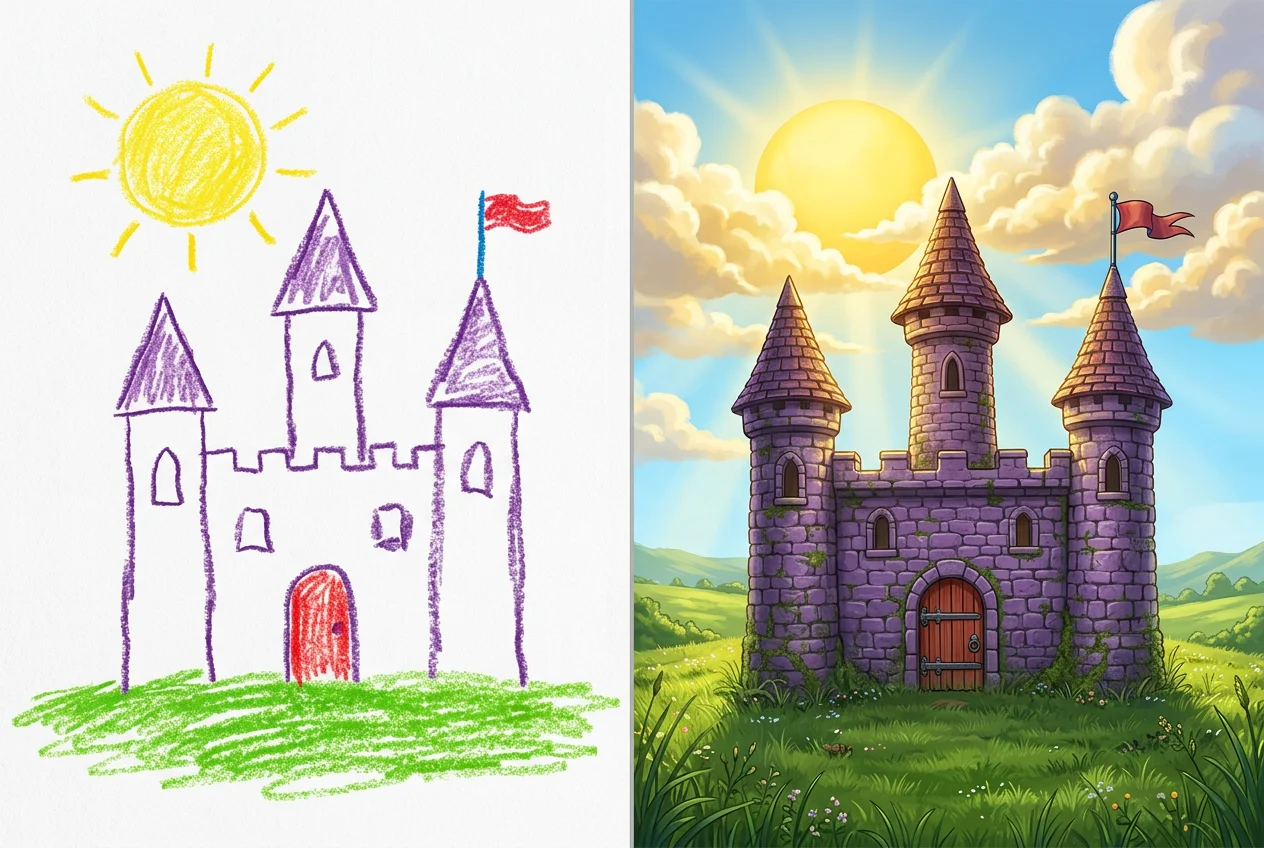
So the goal isn’t a perfect tiger. The goal is their tiger, made lifelike. Same fierce-but-worried expression. Same stripes that give up halfway. Same slightly-too-big eyes — now with real fur, real depth, real light falling across it. The worried look survives. That’s the whole point. A good transformation keeps the child’s fingerprints all over the result, even as it adds polish and realism on top.
How to make children’s drawings realistic, step by step
You don’t need any artistic skill of your own, and you don’t need expensive software. Here’s the whole process.
Start with a bold, clear drawing
Realism works best when the app has clean lines to interpret. Encourage your child to draw a single subject — one animal, one character, one object — with thick crayons or markers, on plain paper, with a bit of empty space around it. A confident lone tiger transforms far better than a crowded page of twelve overlapping creatures. If your child tends to rush or crowd the page, the trick is fewer subjects drawn bigger, not “better.”
Photograph it well
Lay the paper flat, find natural light, and fill the frame with the drawing. No shadows across the page, no glare, camera held steady. This thirty-second habit does more for the final realism than anything else, because the app can only make lifelike what it can clearly see.
Choose a realistic style — then let your child react
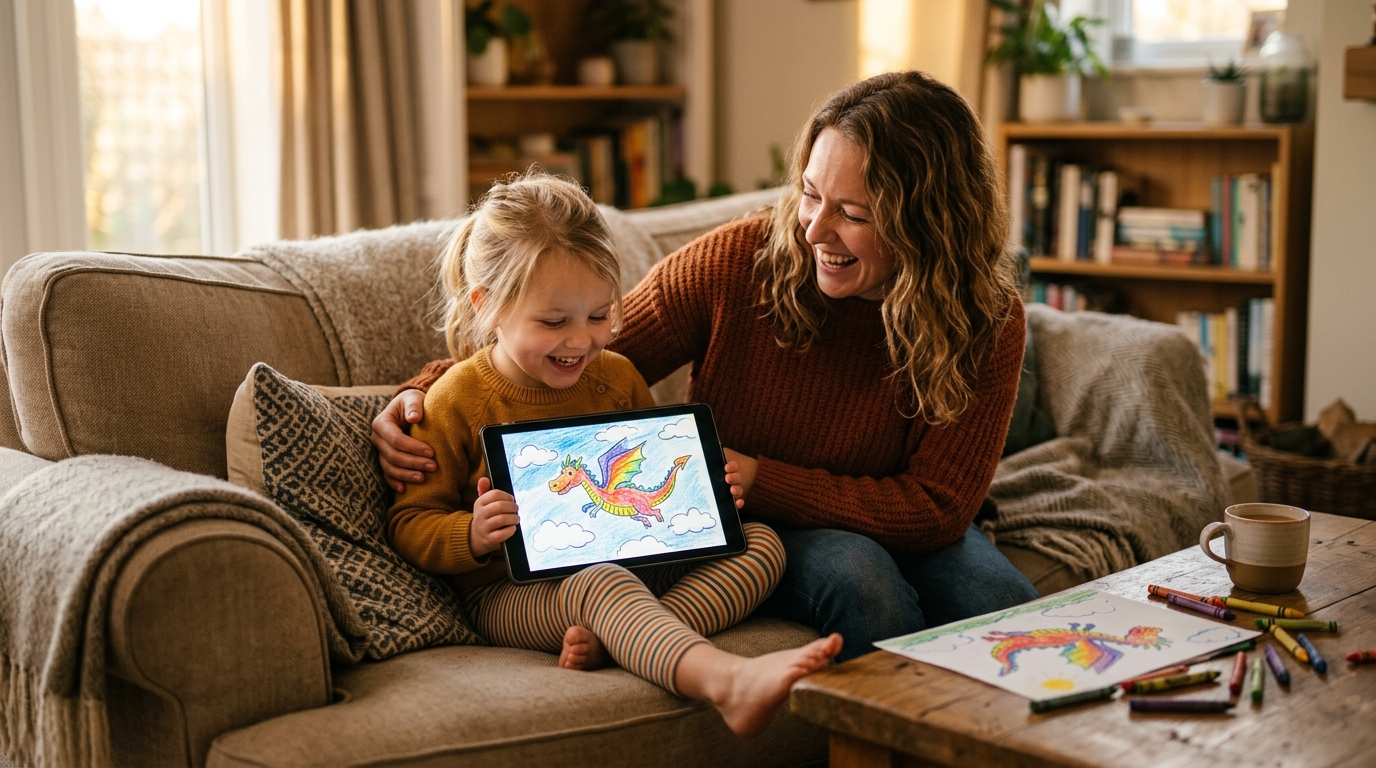
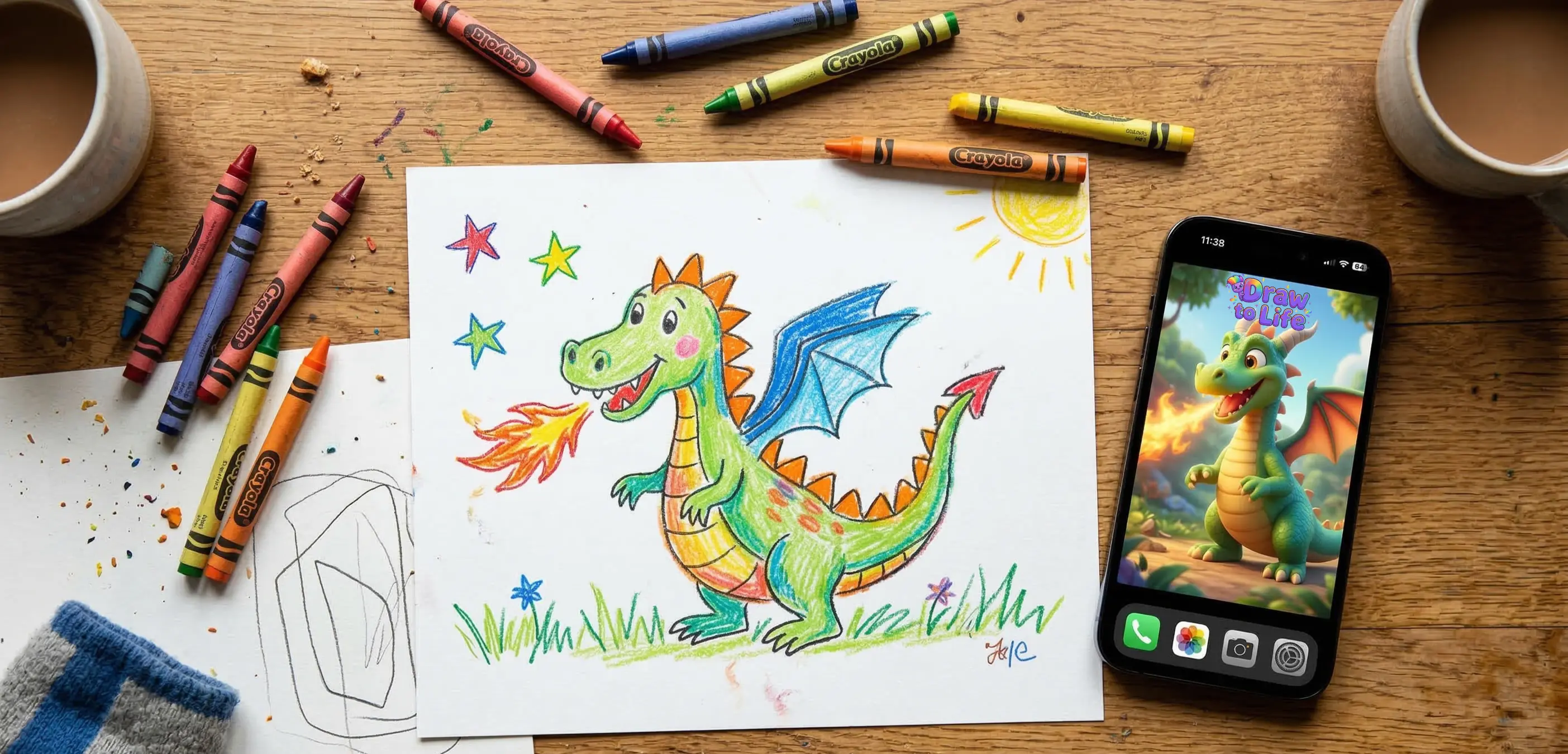
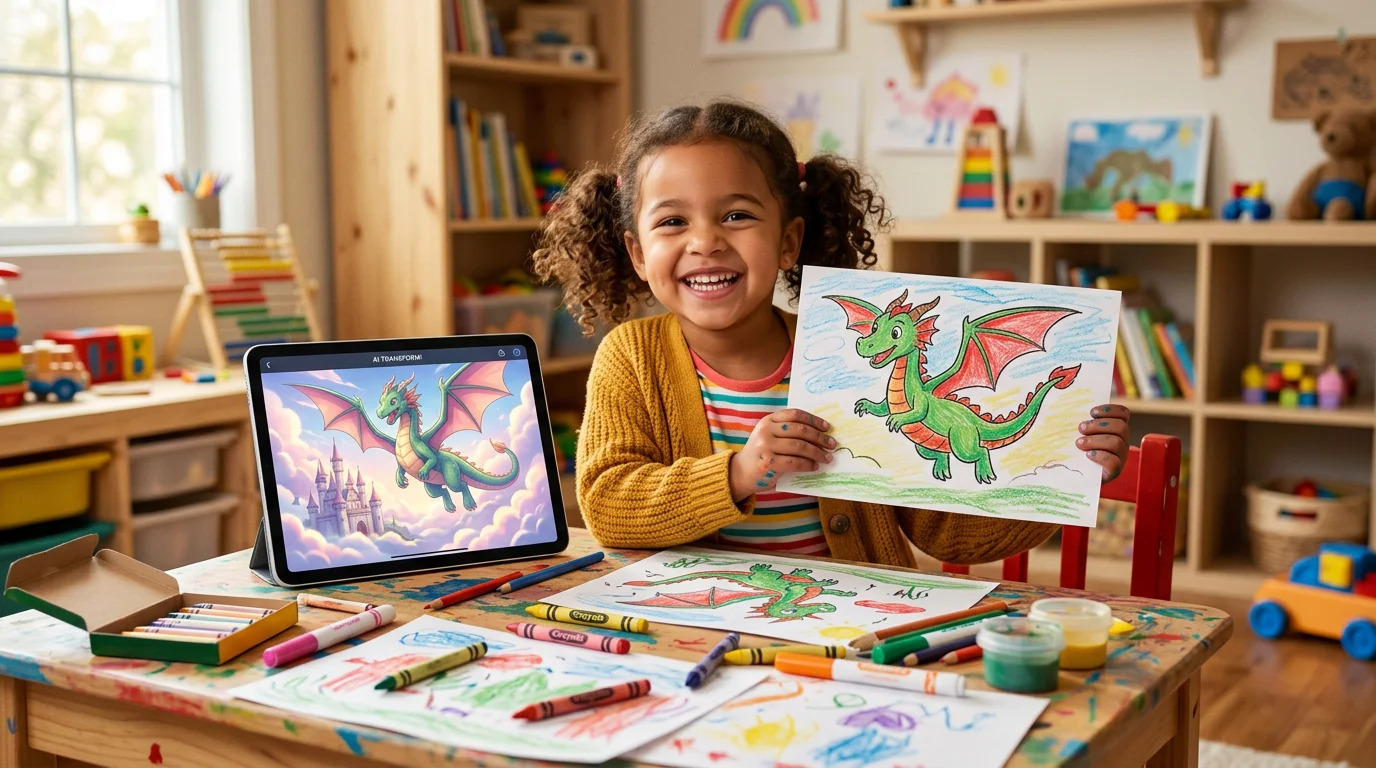
This is where a tool like DrawToLife comes in. Snap the photo, choose the realistic style, and in seconds the flat tiger becomes a lifelike one — fur, whiskers, the soft shadow under its belly — while keeping its original pose and expression. The “realistic” option is one of several styles the app offers; our full walkthrough of turning kids’ drawings into professional art shows how each one handles the same sketch differently. Let your child be the judge of whether it captured their tiger. Their verdict is the only one that counts.
Turning drawings into real life — not just realistic pictures
“Realistic” doesn’t have to stop at a still image. For a lot of children, the real thrill is seeing their creation move through the world — turning their drawings into real life rather than just a lifelike picture.
This is where animation comes in. The same tiger that’s been rendered realistically can also be brought to life with gentle motion: a slow blink, a swish of the tail, a single padding step. DrawToLife’s animate-your-drawings feature adds this kind of age-appropriate movement in seconds, and the effect on a five-year-old is hard to overstate. A realistic still picture says here is your tiger, made real. A realistic moving one says here is your tiger, alive and out in the world. For some children, that second version is the one that produces the gasp.
Why this matters more than it looks
It would be easy to file all this under “fun party trick,” and the first transformation is genuinely fun. But there’s something more substantial happening underneath.
When children draw, they’re constantly bumping into the gap between what they imagine and what their hands can yet produce. That gap is normal and healthy — it’s exactly what drives a child to keep practising — but it can also be discouraging. A five-year-old with a vivid tiger in their head and sausage-legs on their paper can conclude, wrongly, that they “can’t draw.” Seeing their sketch rendered realistically, with their idea fully intact, closes that gap in the most encouraging way possible. It tells them: your idea was always good. Your hands are just still catching up. Keep going.
That’s a powerful message at exactly the age when many children decide whether they’re “an artist” or not. If you want the developmental backdrop to this — why a wonky drawing at five is not just fine but expected — our guide to children’s drawing stages by age walks through what’s normal at each phase.
A note on choosing a safe tool
Any app you use to make your child’s drawings realistic should be built for children, full stop. That means: no open text box where a child can type any prompt; no ads or pushy in-app purchases; a clear, readable policy on what happens to the uploaded drawings; and no way for a child to share or publish anything without a grown-up. DrawToLife was designed for ages 3 to 8 with all of these guardrails in place, which is what makes the realistic-rendering and animation features something you can hand over rather than supervise anxiously.
Try it with the next drawing
You don’t need to wait for a masterpiece. The next time your child holds up a lopsided, fierce, slightly worried tiger and asks “does it look real?”, you’ll have a better answer than a polite nod. Snap a photo, render it realistically together, and let them watch their idea cross fully into the real world — stripes giving up halfway, worried expression and all.
Keep the original paper, too. Years from now, the side-by-side — the crayon tiger and its lifelike twin — will tell you exactly what your child saw in their head that day. It turns out the tiger was real all along. It just needed a moment to arrive.