How to Make Drawings Come to Life: 5 Easy Ways
My daughter drew a frog one Saturday morning — a lopsided, lime-green thing with one eye bigger than the other and a smile that took up half its face. She slid it across the kitchen table and said, completely matter-of-fact, “Make him jump.” Not can we make him jump. Make him jump. To her, the drawing wasn’t finished. It was waiting.
That instinct is almost universal in small children. They don’t see a drawing as a fixed picture; they see it as a paused moment. The dragon is mid-flight. The frog is about to jump. So it’s no surprise that one of the most common things parents quietly google is some version of how to make drawings come to life — our kids have been asking us to do exactly that since before they could write their own names.
The good news: you have more options than you think, and most cost nothing but a few minutes of your attention.
How to make drawings come to life: 5 ways that actually work
Some of these are old-fashioned and hands-on. One of them is brand new. They all share the same goal — taking a flat drawing and giving it a sense of movement, story, or life. Try them in any order. The best one for your family is whichever one your child asks to do again.
1. The flip-book classic
The oldest trick in the book, quite literally. Grab a stack of sticky notes and have your child draw the same character on each page, moving it a tiny bit each time — a frog crouching, then mid-jump, then landing. Flick through with your thumb and the frog hops. For ages five and up, it’s a brilliant introduction to how animation actually works: lots of small still pictures, played in sequence. Children adore it precisely because they made every frame.
2. Add a voice and a story
You don’t always need movement — sometimes you just need a narrator. Ask your child to tell you who the character is and what they’re about to do, then play it back: “This is Boris, he’s scared of Tuesdays, and right now he’s running away from one.” A drawing with a story attached stops being a picture and becomes a scene. It costs nothing, builds storytelling skills, and works in the back of a car.
3. Play with light and shadow
Tape the drawing to a sunny window, or shine a torch behind it in a dark room and let the character’s shadow loom huge on the wall. Move the torch and the shadow moves. Children are spellbound by this, and it teaches them something true: light changes how things feel. A friendly dinosaur becomes a dramatic silhouette — the same drawing, suddenly alive.
4. Cut, fold, and make it move
Cut the character out, glue it to a lolly stick, and you have a puppet. Add a paper tab behind an arm and it waves; fold a mouth so it opens and closes. These little mechanisms turn a drawing into a toy your child can perform with, and the engineering — how do I make the wing flap? — is real problem-solving dressed up as play.
5. Let AI animate it (the easy, modern way)
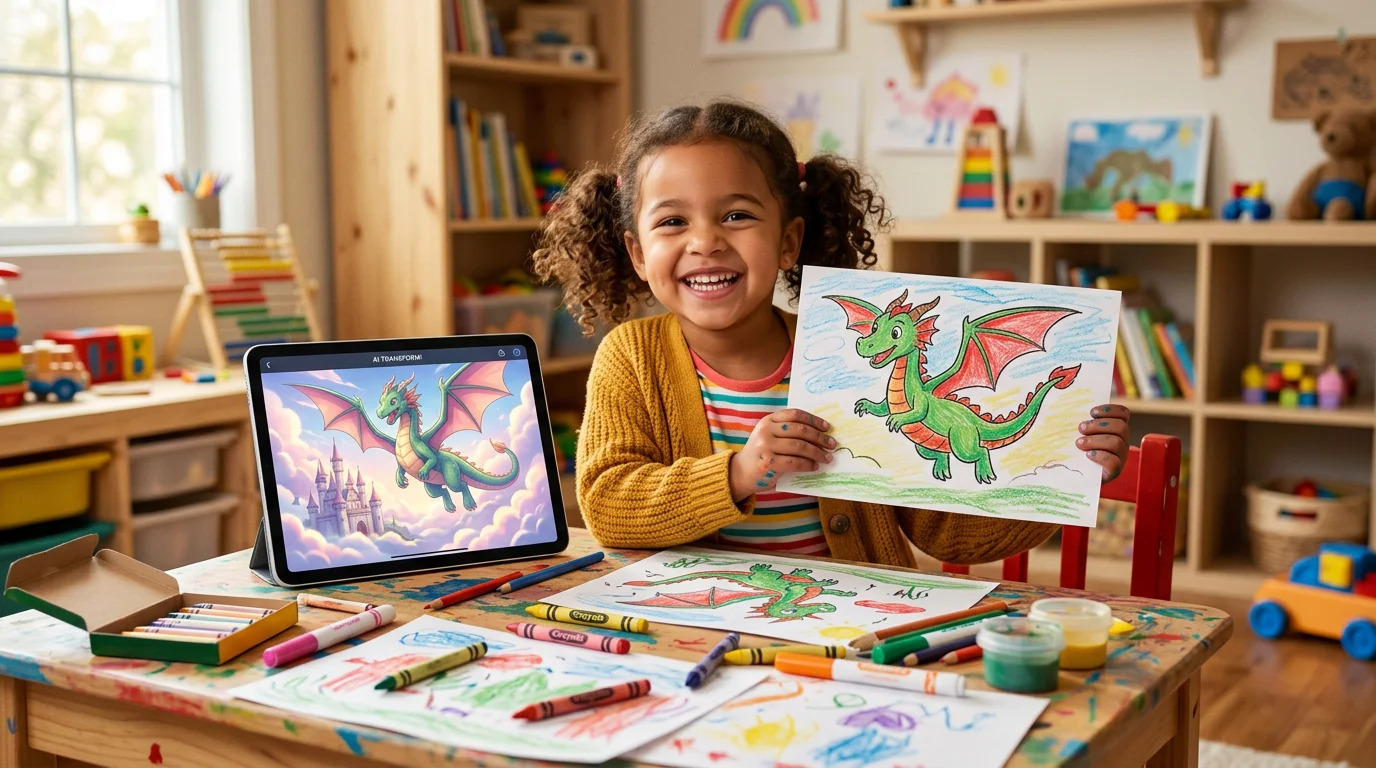
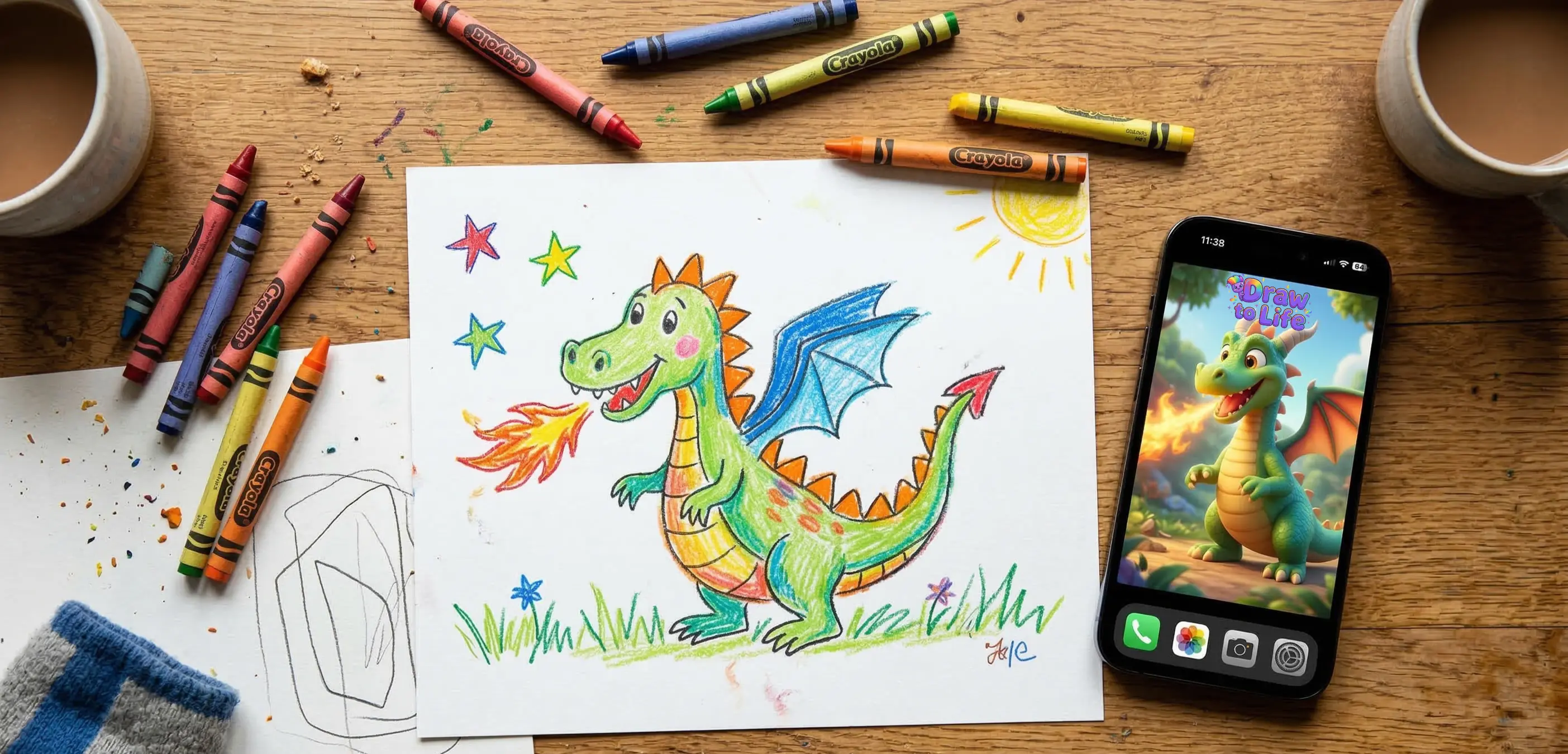
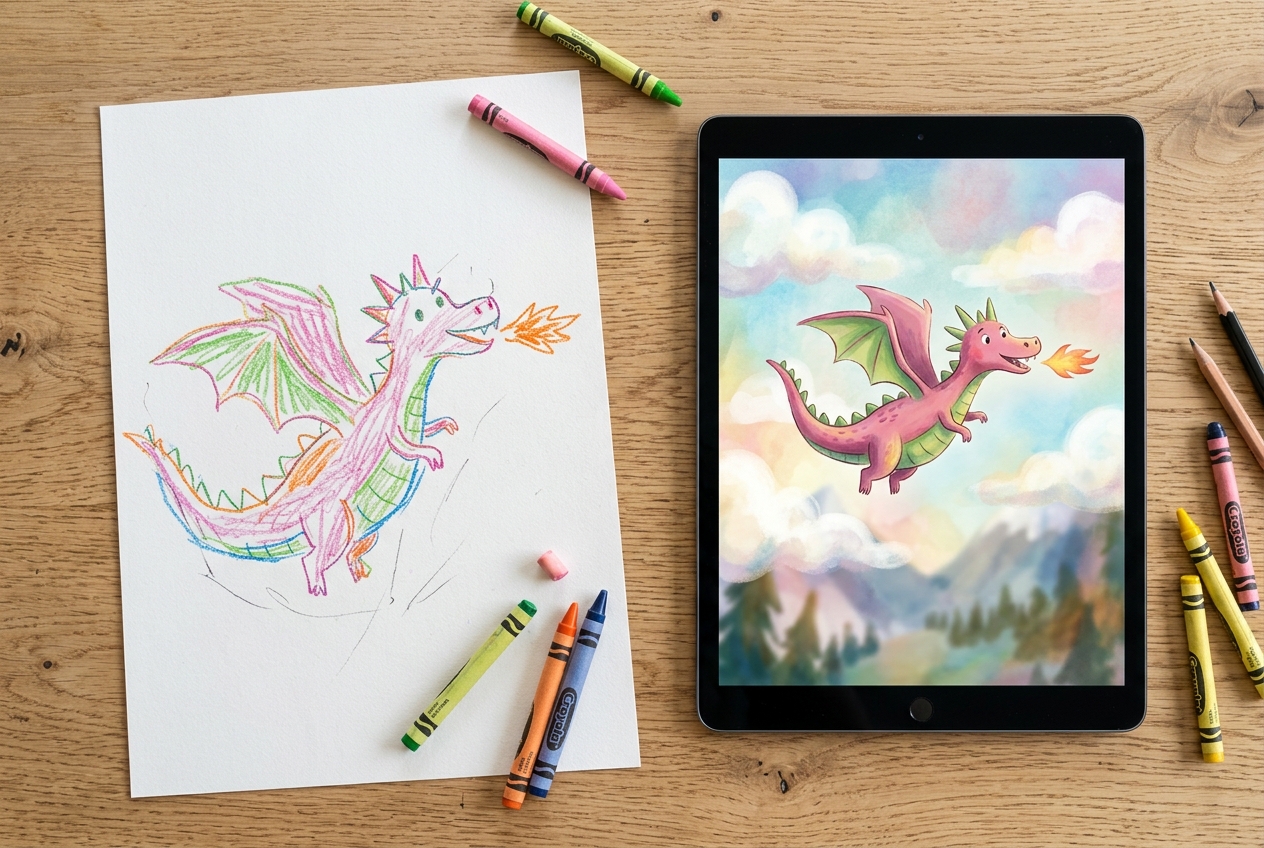
This is the newest answer to how to make drawings come to life, and for a lot of families it’s the one that produces the biggest gasp. Child-safe AI tools take a photo of your child’s drawing and add gentle motion — a dragon flaps its wings, a boat rocks, a frog actually jumps — while keeping the original wobbly crayon lines exactly as they were. The result looks like the drawing itself woke up. If you want to try it, DrawToLife has a dedicated animate-your-drawings feature built for ages 3 to 8, and the whole process takes seconds rather than the forty minutes a flip-book demands.
How AI animation actually works, in plain language
You don’t need to understand machine learning to use it. In quick succession, the app reads the drawing, identifies the main character and any action your child suggested — a pair of wings, a path, a sun — lifts it from the background, and adds small, gentle movements. The crucial word is gentle: the best apps keep the shaky lines, the too-big eyes, and the hopeful colours, adding just enough motion to feel alive without overwriting the drawing. Children instantly spot when their art has been replaced, and lose interest the moment it stops feeling like theirs. We go deeper into this in our guide on how to turn kids’ drawings into animated videos.
Choose a tool that’s actually built for children
If you go the AI route, the app you pick matters enormously. A lot of “make your drawing move” tools are repurposed adult design software with a colourful coat of paint, and aren’t safe to hand to a five-year-old. Before you let any app near your child’s art, run through a quick checklist:
- No open text box. A field where a child can type any prompt they like is a content-moderation problem, not a feature. Good kids’ apps use curated styles and pre-set, safe actions.
- No ads or pushy in-app purchases. Free-to-start is fine; free-with-loot-boxes is not.
- A clear data policy. The app should say plainly what happens to the drawings after they’re processed.
- Parent-led sharing. Posting or exporting anything should require a grown-up, full stop.
DrawToLife was built around exactly this checklist — designed for ages 3 to 8, ad-free, with no chat and no way for a child to publish without a parent. It’s the only app I’d put on my own child’s tablet.

A gentle first attempt
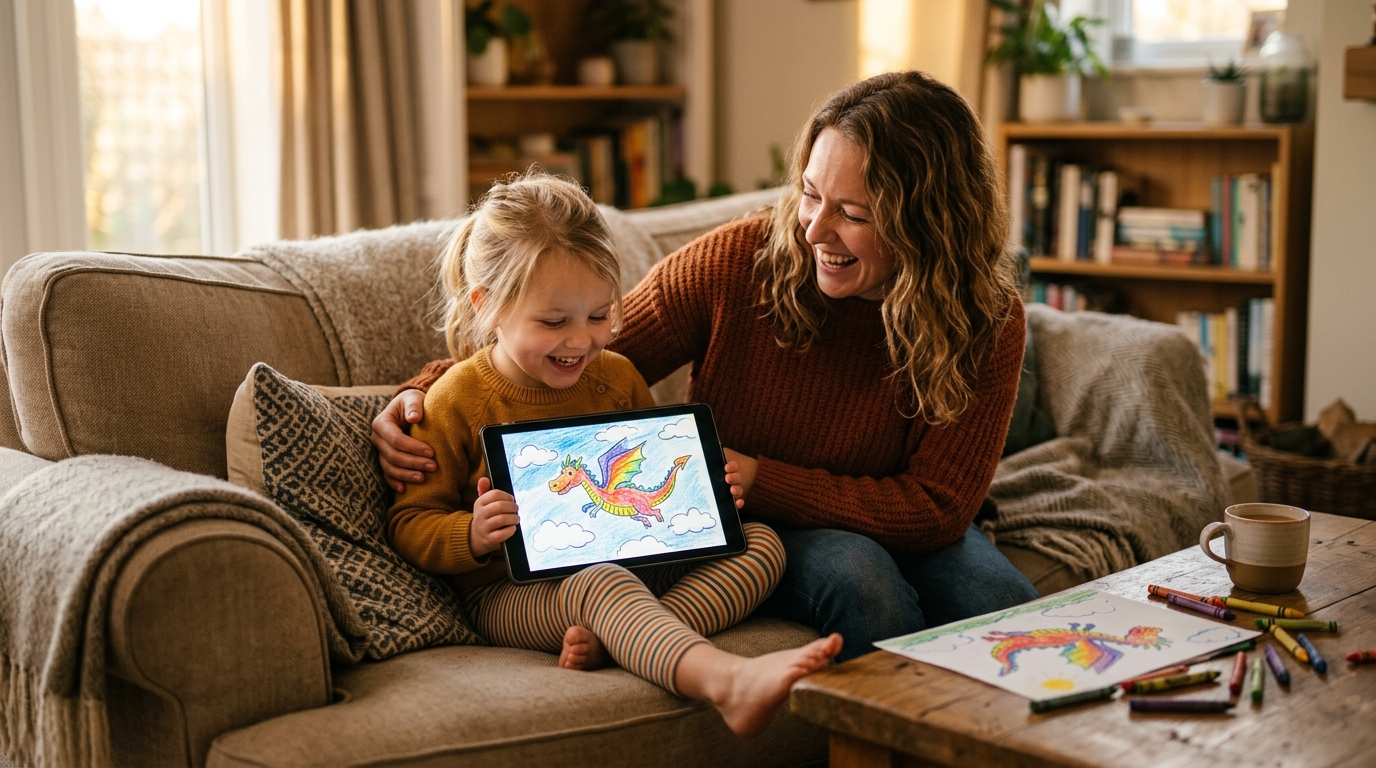
Whichever method you choose, keep the first one small. The goal isn’t a masterpiece — it’s the moment your child understands that the thing they drew can do something. Start with a single character on plain paper, drawn with thick crayons, sit beside them while it happens, and watch their face. That face is the whole reason you’re doing this.
And there’s a lovely knock-on effect: once a child has seen one drawing come to life, they go back to the paper with more intent — thinking about whether their character has wings or legs, whether it’s standing or mid-leap. The animation gives the drawing a purpose, and purpose turns idle scribbling into real practice. To see what that polished end result can look like, our guide to turning kids’ drawings into professional art walks through it style by style.
The takeaway
There is no single right way to make a drawing come to life. A flip-book and an AI app do the same fundamental thing your child asked for at the kitchen table — taking a paused moment and pressing play. Some afternoons you’ll have forty minutes for sticky notes; other evenings, ninety seconds and a tablet. Both count.
So the next time your child slides a lopsided frog across the table and says “make him jump,” you won’t have to fake it. You’ll have five honest answers. Keep the paper, save the result, and let them watch their imagination take its first hop off the page.